Traditional Christmas Mince Pies
Soft, buttery shortbread pastry cases filled with homemade fruit mince, topped with pastry stars and dusted with icing sugar. Made in a shallow patty tin, they keep their shape beautifully and are the easiest thing to hand around through December.
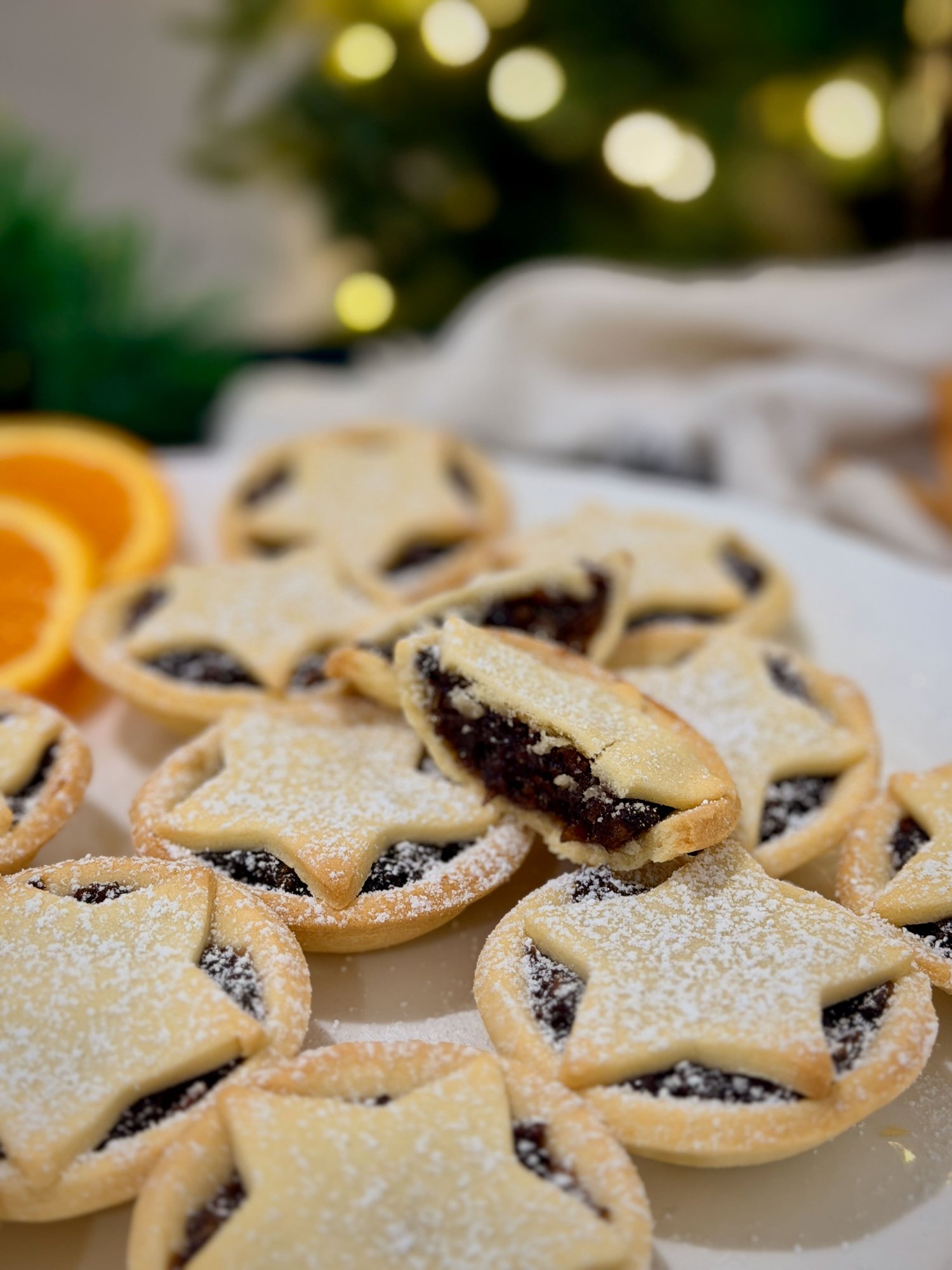
Mince pies were always the first Christmas bake in our house, made in batches through December and handed around with coffee. The pastry is what makes them: a shortbread rather than a shortcrust, soft and buttery with just enough structure to give that first delicate crack when you bite into it. It stays pale on purpose. Chasing a golden top would dry it out and lose the sandy texture that makes it worth the extra step.
The filling is the homemade fruit mince, dark and citrusy enough to cut through all that butter. One level tablespoon in each is plenty, and the ten minutes in the fridge before they go into the oven is the difference between neat little stars and soft, spreading ones.
Prep: 30 min · Cook: 15 min · Yield: 24 pies · Cuisine: Australian · Category: Baking
Ingredients
Traditional Christmas Mince Pies
- 250 g unsalted butter, softened (see Cook's Notes for a dairy free version)
- 100 g icing sugar, sifted
- 1 tsp vanilla extract
- 1 egg yolk
- 350 g plain flour
- 40 g cornflour
- ¼ tsp fine salt
- About 2 cups (500 g) Homemade Fruit Mince, chilled
- Icing sugar, for dusting
Method
- Beat the butter and icing sugar until smooth and creamy, but not pale and fluffy. Beating air into it will change the texture of the finished pastry.
- Mix in the vanilla and egg yolk until just combined.
- Whisk the flour, cornflour and salt together in a separate bowl. Add to the butter mixture and mix on low speed only until a soft dough comes together. Stop as soon as it does.
- Shape into a flat disc, wrap and refrigerate for 30 minutes.
- Dust the bench and the rolling pin well with flour. Roll the chilled pastry out to 3 to 4 mm thick. Cut 24 rounds large enough to line the wells of shallow patty tins. Slide a bench scraper under each round to lift it, and ease it into the tin without stretching. Work with half the pastry at a time and keep the rest in the fridge.
- Cut 24 stars from the remaining pastry, lifting them with the bench scraper as well.
- Spoon 1 level tablespoon of chilled fruit mince into each case, leaving a few millimetres clear below the rim. Lay a star over each one without pressing it into the filling.
- Refrigerate the assembled pies for 10 minutes. Meanwhile, heat the oven to 170°C fan forced.
- Bake for 15 minutes, until the pastry is set and only just beginning to colour at the edges. It should stay pale.
- Leave in the tin for 10 minutes, then loosen gently and lift onto a wire rack.
- Dust with icing sugar once completely cool.
Storage and Make Ahead
Both parts can be made well ahead. The fruit mince keeps in a sealed jar in the fridge for up to two weeks and is better after at least 24 hours, and the pastry can be made a day ahead and kept wrapped in the fridge until you are ready to roll it.
Once baked and completely cool, keep the pies in an airtight container at room temperature. Dust with fresh icing sugar just before they go to the table.
Useful Questions
Can I make these dairy free?
Yes, and the pastry is arguably easier to handle. Replace the butter with the same weight of a dairy free spread. The dough rolls and cuts better, with far less breakage and more give in it. The only change is the bake: give them 20 minutes rather than 15.
Why does the pastry stay so pale?
Because it is a shortbread rather than a shortcrust, and there is no egg wash. Baking it until it turns golden dries it out and loses the soft, sandy texture. Set and barely coloured at the edges is exactly where you want it.
Why chill the pies again after assembling them?
The ten minutes in the fridge firms the butter back up after rolling and handling. It is the difference between stars that hold their points and stars that soften and spread.
How much fruit mince does one batch use?
About two cups, so one jar of Homemade Fruit Mince will fill roughly two batches of pies.
Are mince pies served warm or cold?
In the northern hemisphere they are usually served warm, but an Australian Christmas rarely calls for it. These are made with a shortbread pastry rather than a shortcrust, so they are best at room temperature, where the pastry stays crisp and biscuit like. Warming them softens it. Both are pleasant, they are just different things.
Serving Suggestion
These are made to be eaten at room temperature, which is how they are eaten here. The shortbread stays crisp and biscuit like, and warming them softens the very thing that makes them worth the extra chill time. They can be warmed if you prefer, and they are lovely that way, but it is a different pie.
Our way is a glass of red on the couch with a film on and the tree lights still going. The darker fruit notes in the wine sit beautifully against the citrus and spice in the mince. They also belong on a Christmas sweets platter alongside the Traditional Christmas Fruit Cake.
Notes
If you only have salted butter, leave out the ¼ teaspoon of salt entirely.
For a dairy free version, swap the butter for the same weight of dairy free spread. Tablelands Dairy Free Spread works well and is stocked at both Woolworths and Coles. The dough is more elastic and easier to work with, and the pies need 20 minutes rather than 15.
Flour the rolling pin as generously as the bench. This pastry is high in butter and will stick to the pin long before it sticks to the surface.
Use a bench or pastry scraper to lift the rounds and the stars rather than your fingers. It moves them cleanly without stretching or tearing, and it keeps the warmth of your hands off the pastry, which matters more with shortbread than with an ordinary shortcrust.
Do not overbeat the butter and sugar. Creamy and smooth is right, pale and fluffy is not, and aerated pastry loses the shortbread texture.
One level tablespoon per pie is enough. Overfilled pies bubble over and stick to the tin.
Keep the second half of the pastry in the fridge while you work. It softens quickly, and warm pastry tears when you lift it into the tin.
Let them sit in the tin for the full 10 minutes before moving them. Straight out of the oven the pastry is still fragile and will break.
The Grace Table Tip
Dust the icing sugar only once the pies are completely cool. On a warm pie it dissolves into the pastry within a minute and disappears, which is why they look freshly dusted in some photographs and bare in others.