Slow-Roasted Garlic, Rosemary & Lemon Lamb Shoulder
Slow-roasted lamb shoulder seasoned simply with garlic, rosemary, oregano and lemon, roasted covered until tender, then uncovered in a hot oven until the fat renders and the outside turns deeply browned. Serve in generous pieces with its garlicky roasting juices and fresh, sharp salads alongside.
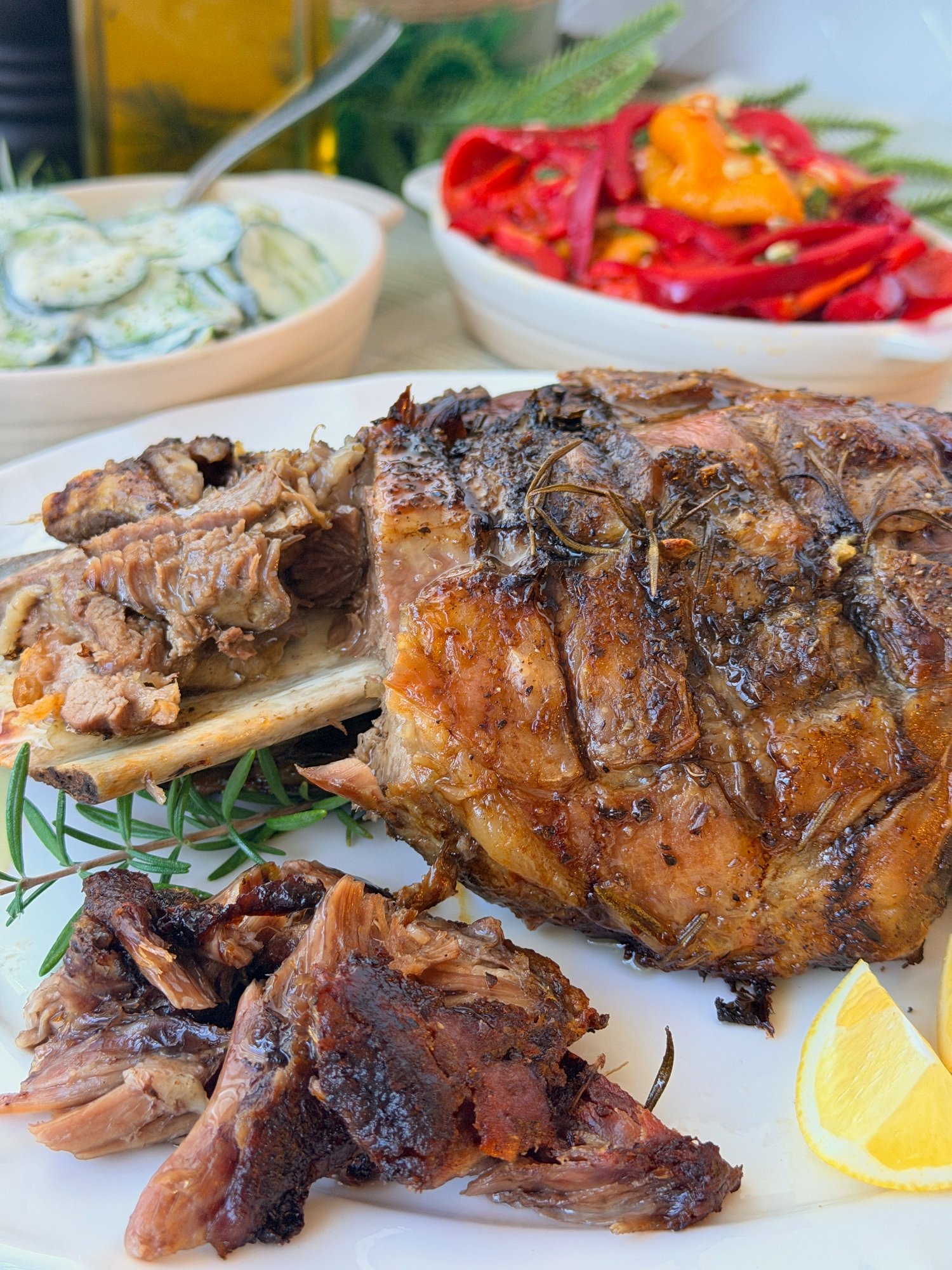
Lamb shoulder asks for patience far more than effort. Slivers of garlic pushed into small cuts across the meat, a rub of oregano, lemon zest and good olive oil, a few sprigs of rosemary in the dish, and then the oven does nearly all of the work. A few hours under a tight cover begin softening the shoulder, then a long final hour uncovered in a hot oven renders the fat, turns the outside deep brown and leaves the bone ready to slide free. I keep the seasoning deliberately simple, with no wine, no mustard and no long list of spices, so the lamb and its garlicky juices carry the plate. Bring it to the table in big pulled pieces with a cool cucumber salad and sweet roasted capsicum alongside, and let everyone help themselves.
Prep: 15 min · Cook: 240 min · Serves: 6 · Cuisine: Mediterranean · Category: Lamb
Ingredients
Slow-Roasted Lamb Shoulder
- 1 bone-in lamb shoulder, approximately 1.9 kg
- 6 garlic cloves
- 2 tbsp extra virgin olive oil
- 2 tsp dried oregano
- 3 to 4 sprigs fresh rosemary
- 1 lemon
- 2 tsp sea salt
- 1 tsp cracked black pepper
- 250 ml chicken stock or water
Method
- Preheat the oven to 190°C conventional / 170°C fan.
- Pat the lamb shoulder thoroughly dry. Make several small cuts across the surface.
- Thinly slice 3 garlic cloves and tuck the slices into the cuts.
- Rub the lamb all over with the olive oil, oregano, sea salt, black pepper, the finely grated zest of the lemon and the juice of half the lemon.
- Place the lamb in a roasting dish. Smash the remaining 3 garlic cloves and arrange them around the lamb with the rosemary.
- Pour the chicken stock or water into the dish around the lamb, taking care not to wash the seasoning from the surface.
- Cover the dish tightly with baking paper and then foil. Roast for 3 hours.
- Remove the baking paper and foil. Increase the oven to 200°C conventional / 180°C fan.
- Roast uncovered for about 1 hour, until the fat has rendered, the outside is deeply browned and the bone wiggles loosely when you grip it. If the bone still holds firm, roast for another 15 minutes and check again. Do not re-cover the lamb at this stage. If the pan juices begin to scorch, add a small splash of water to the pan only.
- Remove from the oven and rest for at least 20 minutes.
- Pull the lamb into generous pieces and spoon some of the garlicky roasting juices over the meat before serving.
Serving Suggestion
Serve with Roasted Capsicum Salad with Garlic & Vinegar and Cucumber, Yoghurt & Dill Salad. The cool yoghurt and sharp vinegar cut through the richness of the lamb beautifully, and a loaf of crusty bread for the pan juices is never a bad idea.
Storage & Make Ahead
Refrigerate leftover lamb with some of its roasting juices in an airtight container for up to 3 days. Reheat gently, covered, with a spoonful of the juices so the meat stays moist. The lamb can also be cooked ahead and reheated before serving, although the browned exterior is at its best on the day it is roasted.
Useful Questions
How do I know when lamb shoulder is ready? Grip the exposed end of the bone and give it a gentle wiggle. When it moves loosely and a fork slides into the thickest part with almost no resistance, it's ready. If the bone holds firm, it needs more time.
Can I go by internal temperature? Only as a guide. A shoulder can read 90°C and still be firm, because the connective tissue needs time at that heat to soften. The bone and fork test tells you far more.
Why does the lamb finish uncovered? Lamb shoulder carries a lot of fat, and it needs strong, dry heat to render it properly and brown the outside. The uncovered hour is where that happens.
Notes
Shoulder needs real heat. All that fat has to render, and a low, gentle oven will leave the meat tight and fatty for far longer than you expect, so stay with the temperatures in the method.
The uncovered hour matters most. That's where the fat renders, the outside browns and the meat finally lets go of the bone. Keep it uncovered right to the end.
Tenderness matters more than the clock. Shoulders vary, and yours may need an extra 15 to 30 minutes. Keep checking the bone until it moves freely.
Pour the stock around the lamb rather than over it, so the oregano, lemon zest, salt and pepper stay on the meat.
The Grace Table Tip
Use the bone as your guide. When you can grip it and feel it shift loosely in the meat, the lamb is ready to rest.
For a larger 2 to 2.5 kg shoulder, allow an extra 30 to 45 minutes of covered roasting and judge doneness by the bone, not the weight.