Slow-Cooked Shredded Beef Ragù
Tender pieces of beef are slowly cooked with onion, carrot, celery, red wine and tomatoes until the meat pulls apart and the sauce becomes deep and rich. Finished gently in the oven, it is a generous family dinner served over your favourite pasta.
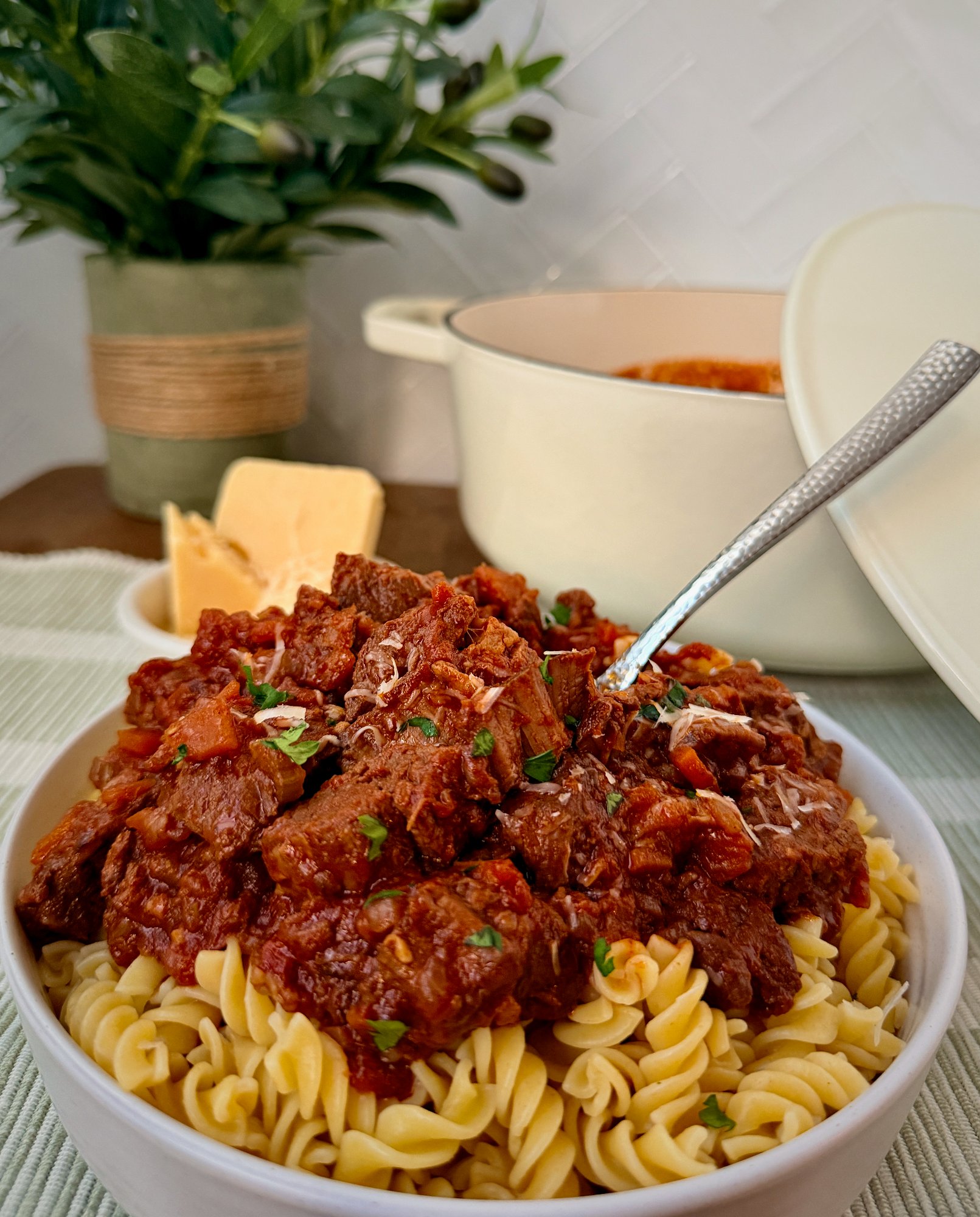
Slow afternoons in the kitchen suit a pot of beef ragù.
Large pieces of marbled beef are browned until their fat begins to render, then cooked with onion, carrot, celery, red wine and tomatoes until the sauce turns deep and the meat gives way at the touch of a fork.
Finishing the pot in the oven keeps the heat steady and allows the beef to soften without the base catching. Rather than shredding the meat too finely, I like to leave a mixture of generous pieces and tender shreds throughout the sauce.
Served over pasta, it is rich, comforting and made for a table where everyone can help themselves.
Prep: 30 min · Cook: 240 min · Serves: 8 · Cuisine: Italian · Category: Dinner
Ingredients
Slow-Cooked Shredded Beef Ragù
- 1.4 kg slow-cooking beef, cut into 5–6 cm pieces
- Sea salt and freshly cracked black pepper
- 1 tablespoon olive oil, only if needed
- 2 large brown onions, finely diced
- 3 carrots, cut into a small dice
- 3 celery stalks, cut into a small dice
- 5 garlic cloves, finely chopped
- 3 tablespoons tomato paste
- 200 ml dry red wine
- 800 g good-quality tinned tomatoes, whole, diced or crushed
- 300–500 ml beef stock, as needed
- 2 bay leaves
- 3–4 sprigs fresh thyme
- 1 teaspoon dried oregano
- 1 teaspoon Worcestershire sauce
- Finely chopped flat-leaf parsley, to serve
- Cooked pasta, to serve
- Freshly grated Parmesan, to serve, optional
Method
- Preheat the oven to 150°C conventional or 130°C fan-forced.
- Pat the beef dry and season well with salt and pepper. Heat a large ovenproof casserole or Dutch oven over medium-high heat. If the beef has an exterior edge of fat, place that side against the hot surface first and allow some of the fat to render into the pot. Brown the beef in batches, leaving enough room between the pieces so they brown rather than steam, turning until deeply coloured on all sides. Add a little olive oil only if the pot becomes dry. Transfer the browned beef to a plate.
- Reduce the heat to medium. Add the onion, carrot and celery to the rendered fat in the pot and cook for 12–15 minutes, stirring regularly, until softened and beginning to colour. Add the garlic and cook for a further minute.
- Stir in the tomato paste and cook for 3 minutes, allowing it to darken slightly. Pour in the red wine and scrape the base of the pot to release all the browned flavour. Simmer until the wine has reduced by roughly half.
- Return the beef and any resting juices to the pot. Add the tomatoes, 300 ml of the beef stock, bay leaves, thyme, oregano and Worcestershire sauce. If using whole tomatoes, break them apart with a wooden spoon. The liquid should come roughly three-quarters of the way up the beef. Add more stock only if needed.
- Bring the sauce to a gentle simmer on the stovetop, then cover with a tight-fitting lid and transfer to the oven. Cook for 3½–4 hours, checking after approximately 2½ hours and again as needed. Stir gently and add a splash of stock or water only if the sauce appears to be reducing too quickly.
- The beef is ready when it gives way easily with a fork. Remove and discard the bay leaves and thyme stems. Break the beef apart directly in the sauce, leaving a mixture of generous tender pieces and smaller shreds rather than pulling it too finely.
- If the sauce is looser than you would like, return the uncovered pot to the oven or place over low heat on the stovetop for 15–20 minutes. If it has become too thick, stir through a small splash of stock or water. Taste and adjust the seasoning with salt and pepper.
- Spoon the ragù over cooked pasta, finish with a scattering of finely chopped flat-leaf parsley, and serve with freshly grated Parmesan at the table, if using.
Serving Suggestion
Spoon the ragù over pappardelle, rigatoni, fusilli or whatever pasta your table loves most. It is also beautiful over Creamy Polenta, Our Family Milho Method, and a simple green side like Garlic Chilli Lemon Broccolini or Garlic Green Beans with Olive Oil & Lemon rounds out the meal without competing with the sauce.
Storage Notes
Allow the ragù to cool before transferring it to a sealed container. Refrigerate for up to 4 days or freeze for up to 3 months. Reheat gently on the stovetop, adding a small splash of stock or water if the sauce has thickened.
Notes
Chuck, blade and gravy beef are all suitable. Avoid very lean cuts, as a little marbling and exterior fat keep the meat tender and build flavour as the fat renders during browning.
Whole, diced or crushed tinned tomatoes all work, but quality matters. Choose tomatoes with plenty of flesh and a rich colour, as inexpensive varieties with thin watery juice can dilute the sauce.
The amount of stock needed varies with the tomatoes, the width of the pot and how quickly the sauce reduces. Begin with 300 ml and add more only as needed.
The oven's gentle, even heat keeps the sauce at a steady simmer without the base catching. It can also be cooked on the stovetop over the lowest possible heat, but will need more frequent stirring.
The Grace Table Tip
Break the cooked beef into a mixture of large shreds and smaller pieces rather than pulling it too finely. The larger pieces stay succulent and give the ragù its generous, slow-cooked texture.
The flavour settles and deepens overnight, making this an excellent recipe to prepare a day ahead. Reheat it gently while the pasta cooks, adding a small splash of stock or water if the sauce has thickened.