Rustic Portuguese Tomato Chicken & Potato Stew
A rustic Portuguese-inspired chicken and potato stew built on a traditional refogado base of onion, garlic, olive oil, paprika, and tomato. Finished uncovered in the oven, the sauce deepens and thickens naturally, creating a rich, comforting dish perfect for sharing with fresh bread.
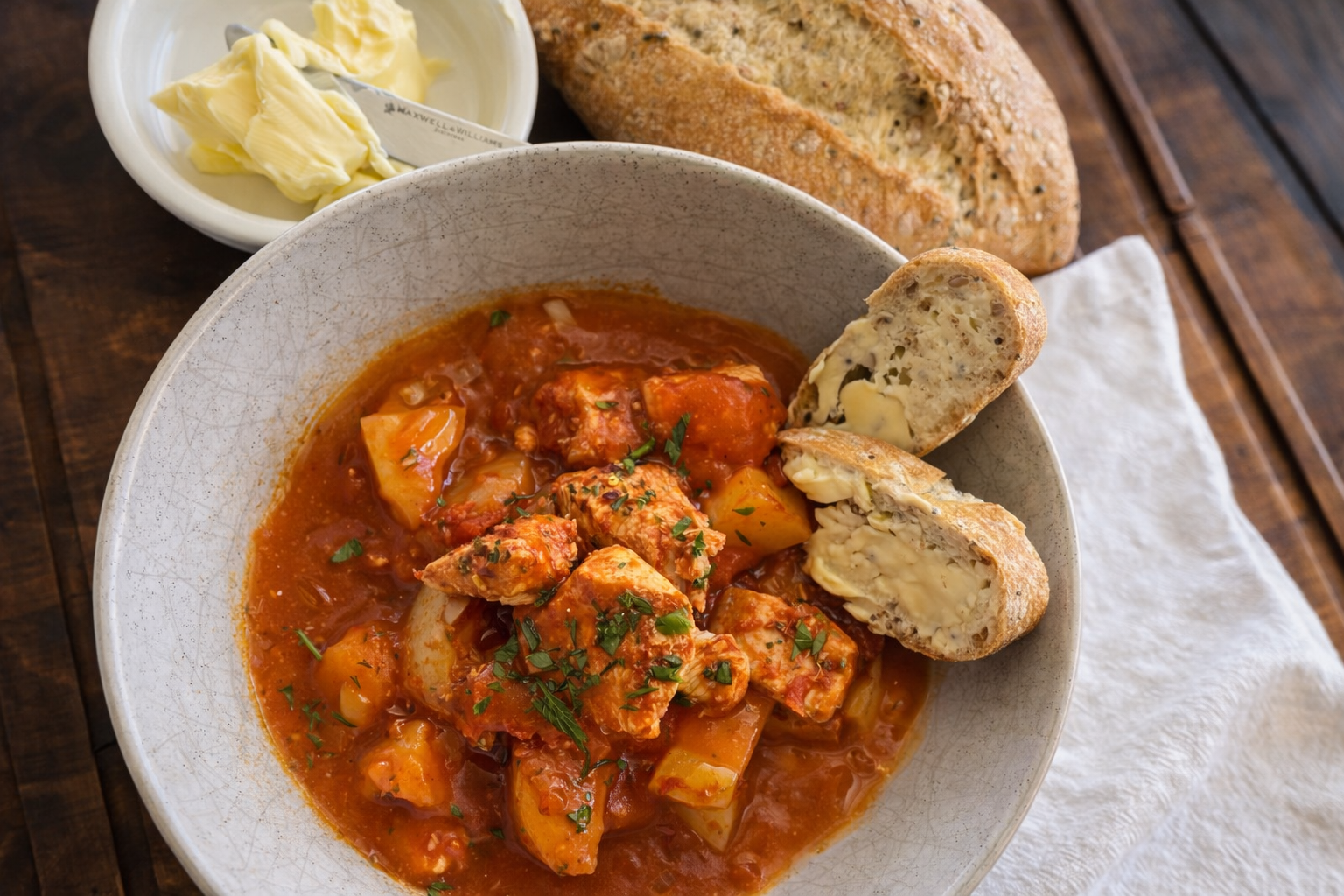
This dish reflects the kind of cooking that sits at the heart of so many Portuguese kitchens. It is simple, deeply comforting food, built slowly and with care, turning everyday ingredients into something generous and full of warmth.
It begins with a refogado, one of the most important foundations in Portuguese home cooking. A refogado is made by gently cooking onion in olive oil, then adding garlic and seasonings to build flavour from the very beginning. It is a humble first step, but it gives the whole dish its depth, richness, and that unmistakable feeling of a meal made properly.
From there, tomato paste and white wine are added to deepen the sauce even further, before the chicken and potatoes are left to cook gently in the oven. As everything bakes, the potatoes soften, the chicken becomes tender, and the sauce reduces into something rustic, savoury, and deeply comforting.
Finished with fresh parsley, a drizzle of olive oil, and a small splash of acid, this is the kind of meal made to be shared. Served with crusty bread or fresh Papo Secos to soak up every last spoonful, it brings the table back to what matters most. Good food, meant to be eaten slowly, with the people you love.
Prep: 15 min · Cook: 75 min · Serves: 6 · Cuisine: Portuguese · Category: Dinner
Ingredients
Main
- 800g–1kg chicken breast, cut into large chunks
- 4–6 medium potatoes, cut into 3–4cm chunks
Refogado Base
- 1 brown onion, finely diced
- 4 garlic cloves, minced
- 2 tbsp olive oil
- 2 bay leaves
- 2 tsp sweet paprika
- ½ tsp smoked paprika (optional)
- 1 tsp dried oregano
- ½ tsp chilli flakes (optional)
- 2 tbsp tomato paste
- 2 x 400g tins crushed or diced tomatoes
- 100ml dry white wine
- 100ml water (for rinsing the tins)
- 1–1½ tsp salt, or to taste
- Freshly cracked black pepper
To Finish
- Flat-leaf parsley, finely chopped
- 1–2 tsp white wine vinegar or a squeeze of lemon juice
- Extra drizzle of olive oil
To Serve
- Crusty fresh bread
- Papo Secos rolls
Method
- Preheat oven to 190°C fan (210°C conventional).
- In a large frying pan or casserole pot, heat the olive oil over medium heat. Add the diced onion with a small pinch of salt and cook for 5–7 minutes until softened and lightly golden.
- Stir through the garlic, paprika, smoked paprika (if using), oregano, chilli flakes (if using), and bay leaves. Cook for 1–2 minutes until fragrant.
- Add the tomato paste and cook for 2–3 minutes, stirring often, until it darkens slightly and becomes rich and concentrated.
- Pour in the white wine and let it simmer for 2–3 minutes to cook off the harshness.
- Add the tinned tomatoes and the 100ml water. Season with salt and black pepper. Simmer for 5–10 minutes until slightly thickened.
- Add the chicken and potato chunks, stirring gently to coat. Ensure the potatoes are mostly sitting in the liquid.
- Cover with a lid or tightly with foil and bake for 50–60 minutes.
- Remove the lid or foil, stir gently, then return to the oven uncovered for 20–25 minutes, until: - potatoes are tender but holding shape - chicken is cooked through - sauce has thickened with lightly caramelised edges
- Drizzle with olive oil, add a small splash of vinegar or lemon juice, and scatter over chopped parsley.
- Serve hot with crusty bread or fresh Papo Secos rolls to soak up the sauce.
Notes
Building the base on the stove gives far deeper flavour than combining everything raw
Cut potatoes evenly so they cook at the same rate
If reheating, add a small splash of water to loosen the sauce
The final drizzle of olive oil and splash of acid bring everything into balance
Leftovers taste even better the next day
The Grace Table Tip
Cooking the tomato paste before adding liquid is what gives this dish its depth. It caramelises slightly, removing acidity and creating a richer, more developed flavour in the final sauce.