Portuguese Easter Bread (Folar da Páscoa)
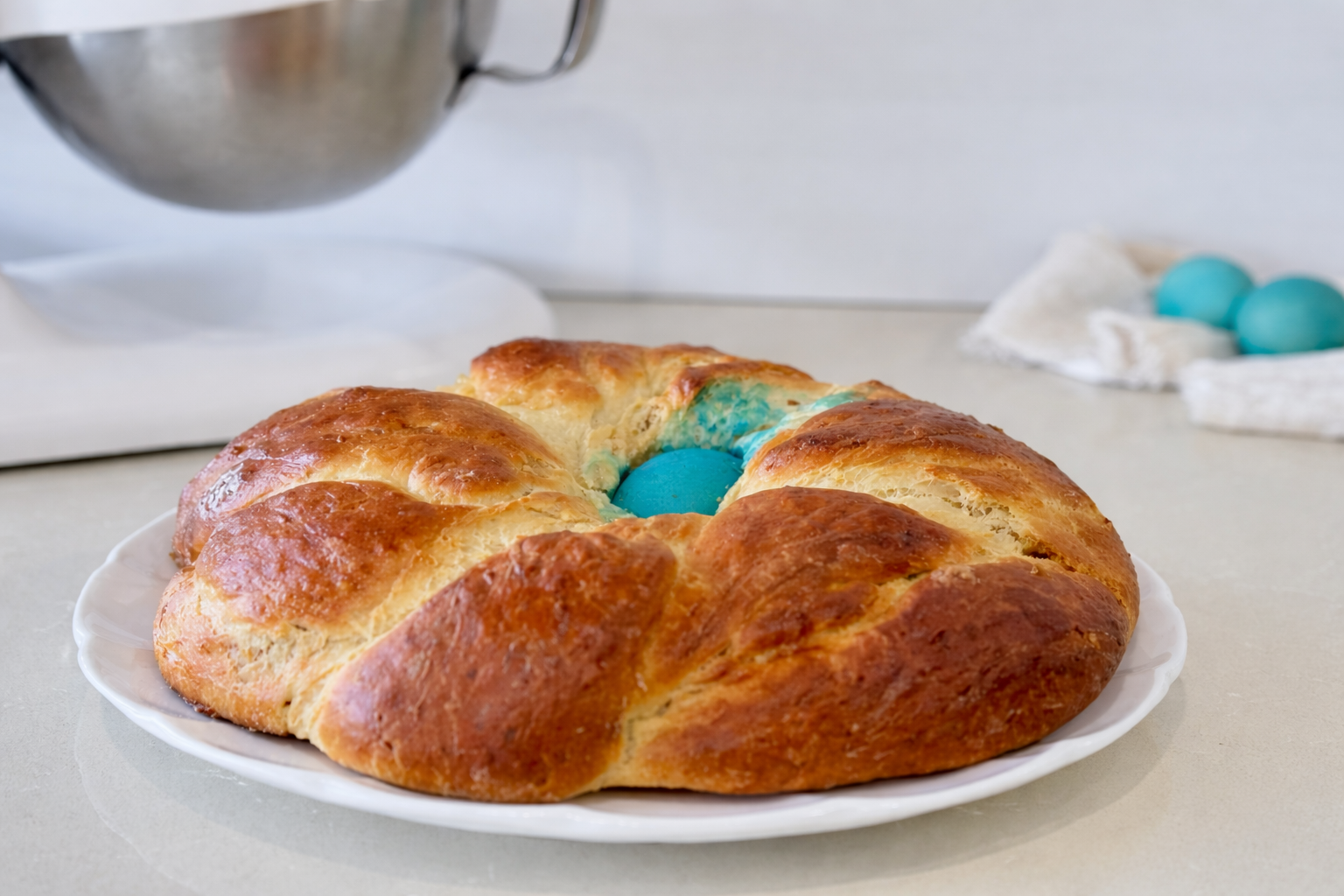
A soft, lightly sweet Portuguese Easter bread, traditionally known as Folar da Páscoa, baked until golden and finished with a coloured egg nestled into the centre.
Easter baking has a way of slowing everything down.
The dough comes together gently, rests on the bench, then rises into something that feels far more special than the simplicity of its ingredients. That is part of the beauty of breads like this. They do not ask for perfection. Just a little time, a little care, and a place at the table.
Folar da Páscoa has long been part of Easter tradition, with the egg at the centre carrying its own meaning of renewal and celebration. In this version, anise and lemon bring warmth and fragrance through the dough, while the coloured egg bakes into the wreath and leaves behind its own imperfect mark.
Homemade food should feel lived in. A little uneven, a little rustic, and full of heart. That is exactly where this bread belongs.
Prep: 25 min · Serves: 10 · Cuisine: Portuguese · Category: Bread
Ingredients
Bread
- 240ml warm milk
- 7g active dry yeast
- 5 grams sugar, for blooming the yeast
- 5 large eggs, about 250g without shells
- 90g caster sugar
- 113g salted butter, softened
- 4g salt
- 520 to 560g plain flour
- zest of 1 lemon
- 1/2 tsp ground anise
Light Cinnamon Sugar Ripple, optional
- 50g caster sugar
- 1 tsp cinnamon
- zest of 1 lemon
To Finish
- 1 hard boiled coloured egg, shell on
- 1 egg
- 15ml milk
Method
- In a small bowl, combine the warm milk, yeast, and 5g caster sugar. Set aside for 5 to 10 minutes, until foamy on top.
- In the bowl of a stand mixer, add the eggs, 95g caster sugar, softened butter, salt, lemon zest, and ground anise. Pour in the bloomed yeast mixture. Add the flour gradually, mixing until a soft dough forms.
- Knead for 8 to 10 minutes until the dough is smooth, elastic, and slightly tacky. If it feels too sticky, add a little extra flour, 1 tablespoon at a time. If it feels too firm, add a teaspoon of milk at a time.
- Place the dough into a lightly greased bowl, cover, and leave in a warm spot for 1 to 1 1/2 hours, or until doubled in size.
- Mix together the caster sugar, cinnamon, and extra lemon zest. You want a damp, sandy mixture rather than a syrup.
- Turn the dough onto a lightly floured surface. Divide into 2 or 3 portions and roll each piece into a rope. If using the cinnamon sugar ripple, lightly flatten the ropes first, sprinkle over a little of the mixture, then roll them back up gently. Twist or braid the ropes together, then bring them into a wreath shape and pinch the ends to seal. Transfer to a lined tray.
- Nestle the coloured hard boiled egg into the centre of the wreath. Press it in gently so it sits securely.
- Cover loosely and leave for 30 to 45 minutes, until slightly puffed and soft to the touch.
- Whisk together the remaining egg and milk. Brush the dough gently all over for a glossy golden finish.
- Bake at 180°C for 25 to 30 minutes, until deep golden brown. If the top is browning too quickly, loosely tent with foil for the last part of the bake.
- Leave to cool slightly before serving. It is lovely warm, but gives a cleaner slice once it has had a little time to settle.
Notes
The flour amount may vary slightly depending on your eggs, the weather, and your flour. Start with the lower amount and add more only if needed.
A soft dough will give you the best texture, so try not to over-flour it.
If the coloured egg releases a little dye as it bakes, that is completely normal and part of the charm.
The cinnamon sugar ripple is optional. The bread is beautiful without it, but it adds a gentle extra layer of warmth.
Serving Suggestion
Serve warm or at room temperature, torn apart at the table.
It is also lovely the next day with butter and a cup of tea.
The Grace Table Tip
A slightly tacky dough is what you want here. It should feel soft and lively in your hands, not dry or stiff. That softness is what gives the bread its tender pull-apart crumb once baked.