Portuguese Corn Bread (Broa de Milho)
A rustic Portuguese corn bread with a crisp golden crust and a soft, airy crumb. Made with polenta and plain flour, this is a practical Australian-kitchen version of Broa de Milho that feels old-fashioned, generous and deeply comforting. Made for olive oil, soup, beans and sharing at the table.
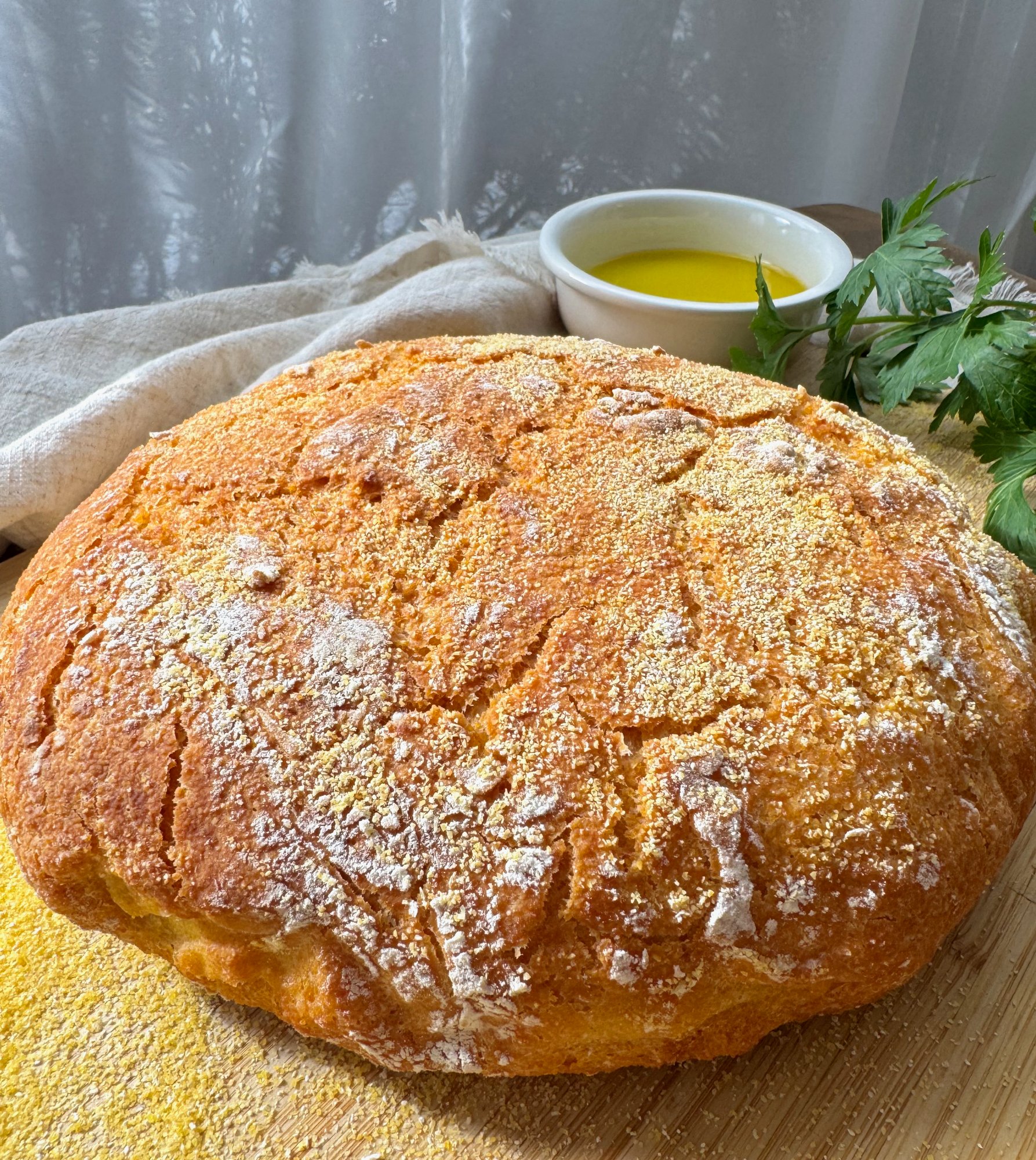
Broa de Milho is one of those breads that carries the feeling of the table with it. I wanted a version that honoured the spirit of Portuguese corn bread while working with ingredients that are easier to find here, where polenta is often what is available instead of traditional maize flour. This loaf took some testing to get right. The key was giving the corn enough water and enough time to soften before the flour went in. What came from that was exactly what I had hoped for: a bread with a crisp, golden crust, a beautiful natural crack, and a soft, tender crumb with real corn flavour. It is rustic and humble in the best way, made for olive oil, soup, beans, salted butter and sharing at the table.
Prep: 30 min · Cook: 55 min · Serves: 10 · Cuisine: Portuguese Australian · Category: Bread
Ingredients
Portuguese Corn Bread (Broa de Milho)
- 250g polenta, blitzed finer
- 400ml boiling water
- 250g plain flour
- 7g instant yeast
- 50ml warm water
- 1 teaspoon honey or sugar
- 8g fine sea salt
- 1 tablespoon olive oil
- 75–125ml extra warm water, as needed
- Extra plain flour, for handling
- Extra polenta, for dusting
Method
- Place the blitzed polenta in a large bowl. Pour over the boiling water and stir well until evenly hydrated. Cover and leave to soak for 45 minutes to 1 hour, until softened and thick like a hydrated corn mash. This step is not optional, properly soaked polenta is what gives the bread its soft, tender crumb.
- In a small bowl or jug, combine the instant yeast with the warm water and honey or sugar. Leave for 5 to 10 minutes until foamy.
- To the soaked polenta, add the plain flour, salt and olive oil. Pour in the bloomed yeast mixture and mix well to combine.
- Add the extra warm water gradually, mixing well between additions, until the dough becomes soft, sticky, heavy and fully hydrated. It should feel cohesive and airy, not dry or clumpy, but it should not be pourable like batter.
- Cover the bowl and leave the dough in a warm place for 1 to 1½ hours, or until clearly puffed and aerated. It may not dramatically double like a white bread dough, but it should feel much lighter and show bubbles across the surface.
- Turn the dough onto a lightly floured surface and shape it very gently into a rough round. Do not knead. Dust lightly with flour and a little polenta.
- Preheat the oven to 220°C conventional with an enamel cast iron Dutch oven inside.
- Place the dough onto a sheet of sturdy greaseproof paper and let it rest for 10 minutes while the Dutch oven finishes heating.
- Carefully lift the dough, paper and all, into the hot Dutch oven. Cover with the lid and bake for 45 to 50 minutes.
- Remove the lid, reduce the oven to 200°C conventional, and bake for a further 10 to 15 minutes, or until deeply golden with a crisp crust.
- Lift the loaf out and cool completely before slicing. This allows the crumb to settle and keeps the texture light, tender and even.
What is Broa de Milho
Broa de Milho is a traditional Portuguese corn bread with roots that stretch back centuries. The name comes from the Latin word for corn, and the bread itself has long been a staple of northern Portugal, where corn flour or maize flour was ground and baked into dense, hearty loaves that sustained families through long working days. Unlike the light, fluffy corn breads associated with American cooking, Broa de Milho is rustic and substantial, with a thick crust, a close crumb and a flavour that is earthy, deeply savoury and with just the faintest suggestion of corn sweetness underneath. It has always been a bread of the table rather than the bakery, made at home, shared generously, and eaten alongside soups, stews, beans and salted fish. In many Portuguese households it is still baked this way, and the smell of it coming from the oven carries the kind of memory that food rarely loses.
Why Polenta Works in This Recipe
Traditional Broa de Milho is made with finely ground maize flour, which is not always easy to find in Australian supermarkets. Polenta is the practical substitute that works beautifully here, provided it is handled correctly. The key difference is texture: polenta is coarser than maize flour and needs time and heat to soften before it can be incorporated into a dough. That is why the scalding step, pouring boiling water over the polenta and leaving it to soak, is not optional. It is what transforms a coarse grain into a soft, hydrated corn mash that gives the finished bread its tender crumb and genuine corn flavour. Blitzing the polenta briefly before soaking helps it hydrate more evenly and produces a finer, more cohesive crumb. A standard coarse polenta left whole will work, but the texture of the finished loaf improves noticeably when the grain is a little finer before it meets the water.
Understanding the Dough
Broa dough behaves differently to a standard white bread dough, and it helps to know what to expect before you begin. It will not feel smooth or elastic the way a wheat dough does. It will be soft, heavy, sticky and a little rough, and that is exactly right. The corn absorbs water differently to wheat flour, and the gluten development is less pronounced, which means the dough holds its shape through structure and hydration rather than tension. During the rise, do not expect it to double dramatically. It will puff, aerate and feel noticeably lighter than when it went in, and bubbles will appear across the surface. That is the sign it is ready. When you shape it, handle it gently and briefly. There is no kneading here, just a gentle gather into a rough round, a dusting of polenta, and straight onto the paper to rest. The oven does the rest.
Baking in a Dutch Oven
A preheated Dutch oven is what gives Broa de Milho its characteristic thick, crisp crust. When the dough is lowered into a screaming hot, lidded pot, the moisture trapped inside creates a steam environment in those first crucial minutes of baking. That steam keeps the surface of the dough pliable just long enough for the loaf to expand before the crust sets. The result is a better rise, a more open crumb and that beautiful natural crack across the top that is part of what makes Broa look the way it does. The lid comes off in the final stage of baking to let the crust colour and crisp. Without the Dutch oven, you can replicate some of this effect by placing a tray of boiling water in the bottom of the oven for the first half of the bake, but the Dutch oven method gives a more consistent and reliable result and is worth using if you have one.
Serving Suggestion
Broa de Milho is beautiful served warm with good olive oil or salted butter alongside Warm Cannellini Beans with Garlic and Olive Oil, Golden Chicken and Rice Soup, or Roasted Mediterranean Vegetable Platter. It also sits naturally beside Portuguese Bread Rolls (Papo Secos) as part of a broader Portuguese bread collection on The Grace Table, and makes a generous addition to any table spread with olives, cured meats and simple broths.
Frequently Asked Questions
Can I use regular polenta without blitzing it? You can, but the texture of the finished loaf will be coarser and the crumb will be less even. Blitzing the polenta briefly before soaking helps it hydrate more uniformly and produces a finer, more cohesive dough. If you do not have a blender or food processor, soak the polenta for the full hour rather than 45 minutes to give it as much time as possible to soften.
Can I make this without a Dutch oven? Yes, though the result will be slightly different. Without a Dutch oven, place a small metal tray in the bottom of the oven while it preheats. When the loaf goes in, carefully pour boiling water into the tray to create steam. This replicates some of the steam environment that gives Broa its crisp crust and open crumb. The Dutch oven method is more reliable, but the steam tray approach produces a good result.
Why didn't my dough double during the rise? Broa dough behaves differently to a white bread dough. Because of the high corn content and lower gluten development, it will not rise as dramatically as a wheat-only dough. Look for the dough to feel noticeably lighter, more aerated and slightly puffed, with bubbles visible across the surface. That is the sign it is ready, even if it has not visibly doubled in size.
Can I use cornmeal or maize flour instead of polenta? Yes. Finely ground maize flour is actually the traditional ingredient in Portuguese Broa de Milho, so if you can find it, it will produce an excellent result. The soaking time may be shorter as maize flour hydrates faster than polenta. Fine cornmeal will also work well. Coarse cornmeal should be treated the same way as polenta, blitzed first and given the full soaking time.
How do I know when the dough has enough water? Stop adding water when the dough feels soft, sticky and heavy but still holds together as a cohesive mass. It should not be pourable like a batter, but it should feel wetter and looser than a standard bread dough. If it feels dry, tight or clumpy at any point, add a little more warm water and mix again. Trust the texture over the measurement.
Can I freeze Broa de Milho? Yes. Slice the loaf completely before freezing and store in an airtight bag for up to one month. Individual slices can be toasted straight from frozen, which refreshes the crust beautifully. If freezing the whole loaf, thaw at room temperature and warm in a 180°C oven for 8 to 10 minutes before serving.
Why does my Broa feel dense rather than airy? The most common cause is under-soaked polenta. If the corn has not fully hydrated before the flour goes in, it will continue absorbing moisture from the dough during the rise and bake, leaving the crumb tight and heavy. Give the polenta the full soaking time and make sure it feels soft and mash-like before you add anything else. The second most common cause is not enough water in the final dough. The dough should feel noticeably wetter and stickier than a standard bread dough before it goes in to rise.
The Grace Table Tip
If you are unsure whether the dough needs more water, stop and look at the texture rather than the number. A fully hydrated Broa dough should feel soft and alive in the bowl, heavy, a little sticky, and clearly aerated after its rise. That feeling is the guide.
Broa de Milho is best eaten on the day it is baked, while the crust is still crisp and the crumb is tender. If keeping it longer, store wrapped at room temperature and refresh briefly in a warm oven before serving. It also freezes well, slice before freezing and toast straight from frozen.