Portuguese Bread Rolls (Papo Secos)
Soft, lightly golden Portuguese bread rolls with a thin crust, tender crumb, and the traditional central crease pressed through the top before baking. These larger papo secos are made for bifanas, sandwiches, soups, and warm bread baskets.
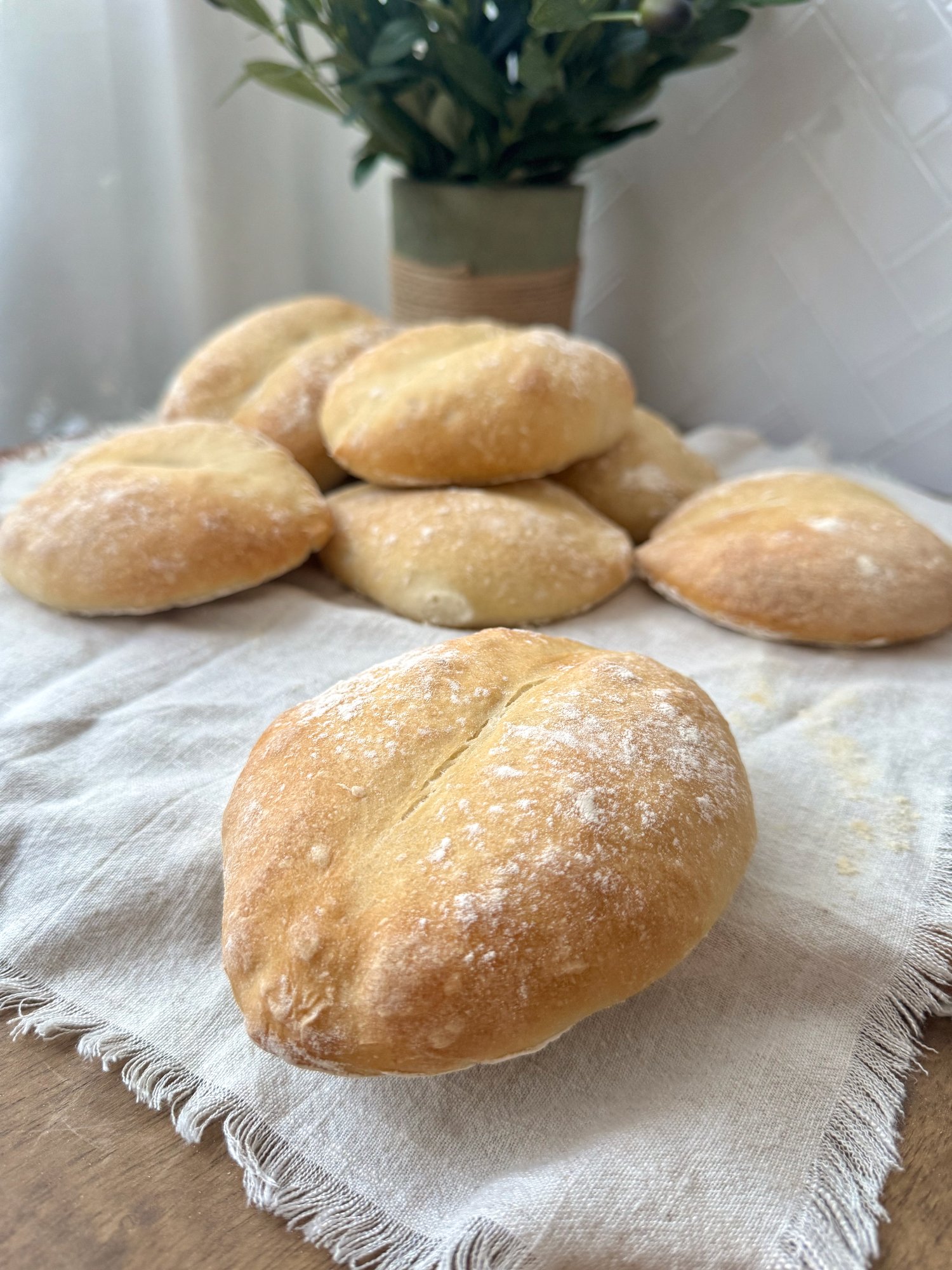
Papo secos are the bread of everyday Portuguese life. Soft inside, lightly golden outside, and marked with that distinctive pressed seam through the centre, they are the rolls found in every Portuguese padaria, tucked into paper bags while still warm and brought home for breakfast, lunch, or dinner. My grandparents knew this bread the way you know something that has always been there, and making it at home carries that same quiet familiarity. The crust is thin and delicate, the crumb tender and light, and the shape holds beautifully once baked. Humble, simple, and worth every minute of the process.
Prep: 45 min · Cook: 24 min · Yield: 8 Bread Rolls · Cuisine: Portuguese · Category: Side Dish
Ingredients
Papo Secos
- 750g bread flour, plus extra for shaping and dusting
- 510g lukewarm water, about 38°C
- 10g instant dry yeast
- 10g sugar
- 15g fine salt
- 1 tablespoon olive oil
Method
- Add the lukewarm water, sugar, and instant dry yeast to the bowl of a stand mixer. Stir gently, then leave for 8 to 10 minutes, or until the mixture looks foamy and active.
- Add the bread flour and mix on low speed until a rough dough forms. All the flour should be hydrated at this point.
- Cover the bowl and leave the dough to rest for 20 minutes. This rest allows the flour to fully absorb the water and makes the dough significantly easier to knead.
- Add the salt and olive oil. Knead with the dough hook on speed 2 for 8 to 10 minutes, or until the dough is smooth, elastic, and pulling away cleanly from the sides of the bowl. The dough should feel soft and slightly tacky, not dry or stiff.
- Lightly oil the bowl or the surface of the dough. Cover and leave in a warm place until doubled and airy, about 1 to 1½ hours.
- Turn the dough out onto a lightly floured surface. Divide into 8 even pieces, each around 160g.
- Shape each piece gently into a tight ball, creating surface tension as you go. Cover and rest for 10 minutes to allow the dough to relax before final shaping.
- Working with one piece at a time, gently flatten the dough into a compact oval. Using the side of your hand, press a deep line lengthways through the centre. Fold one side slightly over the other so the dough takes on the traditional papo seco shape. The crease should feel deeper than looks right at this stage. It softens during proofing and baking, so a shallow crease will disappear.
- Place the shaped rolls onto lined baking trays, leaving space between each one. Cover loosely and proof until puffy and lightly expanded, about 20 to 30 minutes. Do not wait for them to double. They should still hold their height and their crease.
- While the rolls proof, preheat the oven to 230°C conventional or 220°C fan forced. Place an empty metal or enamel dish on the bottom rack while the oven heats.
- When ready to bake, place the first tray of rolls in the oven. Carefully pour about 1 cup of boiling water into the hot dish at the base of the oven to create steam, then close the door quickly.
- Bake for 20 to 24 minutes, or until the rolls are lightly golden, well lifted, and sound hollow when tapped on the base.
- If baking a second tray, keep it covered in a cool spot while the first tray bakes, then repeat with fresh boiling water for the second tray.
- Transfer the rolls to a wire rack and cool for at least 25 to 30 minutes before slicing for bifanas. This gives the crumb time to set properly.
What are Papo Secos
Papo secos are one of Portugal's most familiar everyday bread rolls. The name translates loosely as "dry crop," a reference to the distinctive shape, which features a deep central crease pressed lengthways through the top of each roll before the final proof. That crease is what gives them their traditional look and helps the rolls expand in the right direction during baking.
Unlike many European rolls, papo secos have a thinner, softer crust and a tender interior. They are not meant to be dense or chewy. The crumb should be soft enough to eat warm with butter, but structured enough to hold fillings like ham, cheese, roast chicken, or bifanas.
They appear at every kind of Portuguese table, with coffee in the morning, beside soup at lunch, filled for a quick meal, or served with slow-cooked dishes to soak up sauce. They are simple bread, but they carry a great deal of memory.
Why this recipe works
Getting papo secos right at home comes down to four things: hydration, resting, shaping, and steam.
The dough needs to be soft and slightly tacky. A firmer dough may feel easier to handle, but it will bake into heavier rolls. The higher hydration in this recipe gives the rolls their soft, sandwich-style crumb while still providing enough structure for bifanas.
Resting the dough before adding the salt and olive oil gives the flour time to fully hydrate. This makes the dough easier to knead and helps it become smooth and elastic without needing extra flour.
The shaping matters. Each roll is formed with a firm central crease, then folded slightly so the seam stays visible through proofing and baking. The crease should feel deeper than looks right at first. It softens in the oven, so if it is too shallow, it will disappear.
Steam is essential. Adding boiling water to a hot tray at the base of the oven creates the thin, delicate crust that makes papo secos what they are. It also allows the rolls to expand before the crust sets, replicating the steam-injected ovens of a professional padaria.
Frequently asked questions
Can I make papo secos without a stand mixer? Yes. Mix the dough by hand, then knead on a lightly floured surface for 10 to 12 minutes, or until smooth and elastic. The dough will be soft and slightly tacky, so use only enough flour to stop it sticking badly. Too much flour will make the rolls heavier.
Why did my papo secos lose their crease? The crease needs to be pressed firmly before the final proof. It should feel deeper than looks right at the time of shaping. As the dough proofs and bakes, the crease softens. If it is too shallow, it will close over completely. If the crease softens too much before baking, gently re-press the centre line without flattening the whole roll.
Why did my rolls spread instead of rise? This usually happens when the dough is overproofed during the final rise, or when the shaped rolls are too loose. Keep the final proof short. The rolls should look puffy and relaxed, but still hold their shape and height. It is better to bake them slightly underproofed than to wait until they are very soft and spreading.
Can I bake both trays at once? If using a fan-forced oven with even heat distribution, you can bake both trays at once and rotate them halfway through. For the best shape and colour, bake one tray at a time and keep the second tray covered somewhere cool while the first bakes.
Can I freeze papo secos? Yes. Allow the rolls to cool completely, then freeze in an airtight bag for up to one month. Thaw at room temperature and warm in a 180°C oven for about 5 minutes before serving.
What flour is best for papo secos? Bread flour gives the best structure and a lightly chewy, tender crumb. Plain flour can be used, but the rolls may be softer and slightly less structured. Lighthouse Bread and Pizza flour works well in this recipe.
How do I cut papo secos for bifanas? Let the rolls cool first so the crumb sets. Place the roll crease-side up, then use a serrated knife to slice horizontally from the long side. Do not cut through the top crease. Leave a small hinge on the far side so the roll opens like a pocket and holds the pork and sauce without collapsing.
Serving Suggestion
Serve papo secos warm from the oven with good salted butter and nothing else — this is how they are eaten every morning in Portugal. They sit beautifully alongside Portuguese Garlic Rice (Arroz de Alho), the Rustic Portuguese Bean Soup with Chorizo, Cabbage and Potatoes, or the Rustic Portuguese Tomato Chicken and Potato Stew, where they earn their place soaking up every last drop of sauce. For a generous table, pair them with the Low and Slow Smoked Beef Brisket or serve alongside Mini Portuguese Baked Eggs for a Portuguese-inspired brunch. They are also the natural companion to Golden Chicken and Rice Soup on a cold day.
Notes
The dough should feel soft and slightly tacky after kneading. Resist the urge to add more flour. A moist dough is what gives papo secos their light, tender crumb.
The 20-minute rest after mixing the flour and water is not optional. It makes a real difference to how the dough handles during kneading and reduces the amount of work needed to develop it.
Press the central crease much deeper than feels right at the time of shaping. It will soften during proofing and baking. A crease that feels exaggerated at the bench will look just right once baked.
Keep the final proof short. The rolls should look puffy and relaxed but still hold their shape and crease. Overproofed rolls will spread rather than rise in the oven.
Steam is not optional. Pouring boiling water into a hot tray at the base of the oven the moment the rolls go in is what creates the thin crust and soft interior that defines a proper papo seco.
If baking in batches, keep the second tray somewhere cool while the first bakes. A warm kitchen will overproof the second batch while you wait.
Storage Notes
Papo secos are best eaten on the day they are baked. If keeping overnight, store in a paper bag or loosely wrapped in a clean tea towel. A sealed container will soften the crust. To freeze, allow the rolls to cool completely, then freeze in an airtight bag for up to one month. Thaw at room temperature and warm in a 180°C oven for 4 to 5 minutes before serving.
The Grace Table Tip
For bifanas, let the rolls cool completely before slicing so the crumb has time to set. Place the roll crease-side up and use a serrated knife to cut horizontally from the long side, leaving a small hinge on the far side so the roll opens like a pocket. This keeps the filling inside and stops the roll from falling apart once the sauce soaks in.
Papo secos freeze beautifully. Once completely cooled, freeze in an airtight bag for up to one month. Thaw at room temperature and warm in the oven before serving — they come back remarkably well.