Pantry Garden Minestrone with Risoni and Parmesan
A hearty minestrone built from everyday vegetables, tinned tomatoes, beans, potatoes and risoni. It is freezer friendly and made for using up whatever is sitting in the fridge, finished with parmesan and a drizzle of olive oil.
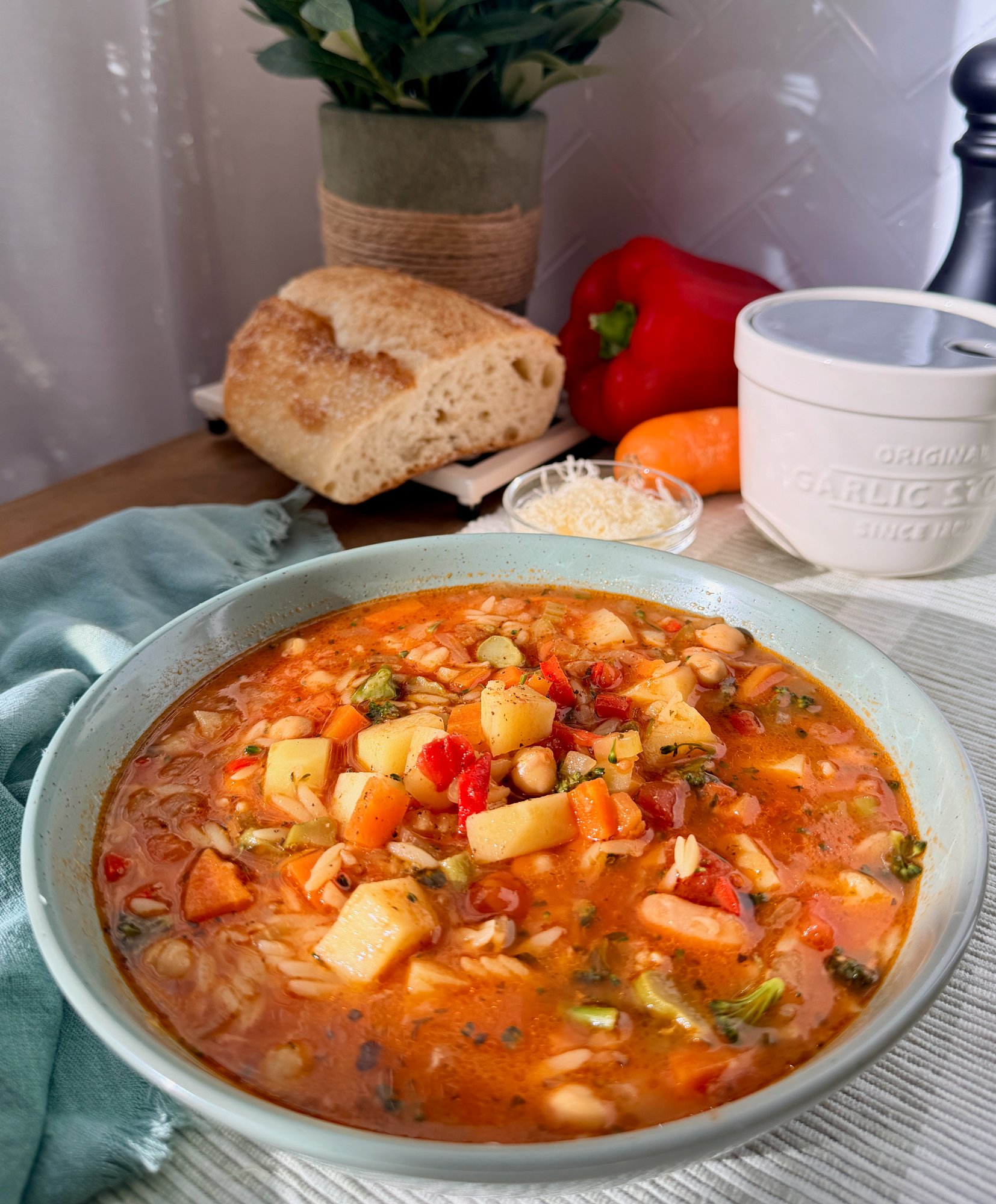
A pot of this on the stove means the kitchen smells like onion, garlic and tomato long before anyone asks what is for dinner. It started as a way to use up a fridge full of odds and ends, and it has earned a permanent place in the rotation since, partly because the broccolini and baby tomatoes keep it tasting fresh rather than heavy. The risoni goes in separately for whoever is eating that night, which means half the pot can go straight into the freezer for a week that needs it more. It is the kind of soup that rewards a slow twelve minutes on the onions and gives back a deeply flavoured broth in return.
Prep: 20 min · Cook: 55 min · Serves: 8 · Cuisine: Italian · Category: Soup
Ingredients
Pantry Garden Minestrone
- 3 tablespoons olive oil
- 1 large onion, finely diced
- 3 celery sticks, finely diced
- 3 carrots, diced
- 1 red capsicum, diced
- 4–6 garlic cloves, finely chopped
- 1 punnet baby grape tomatoes, halved
- 2–3 medium potatoes, peeled and diced into small cubes
- 1 x 400g tin diced or crushed tomatoes
- 1 x 400g tin chickpeas, drained and rinsed
- 1 x 400g tin cannellini beans, drained and rinsed
- 2 litres vegetable stock, or water with stock powder
- 1–2 teaspoons dried Italian herbs or oregano
- 1 teaspoon sweet paprika, optional
- 1 bay leaf, optional
- 1 bunch broccolini, trimmed and chopped
- Salt and black pepper, to taste
- ½ teaspoon sugar, only if needed
- ½ cup risoni, for the portion being served fresh
- Finely grated parmesan, to serve
- Extra virgin olive oil, to serve
Method
- Heat the olive oil in a large pot over medium heat. Add the onion, celery, carrot and capsicum with a generous pinch of salt. Cook for 12–15 minutes, stirring often, until softened and starting to smell sweet.
- Add the garlic and cook for 1 minute until fragrant. Add the baby grape tomatoes and cook for 5–8 minutes, until they soften and release their juices.
- Add the potatoes, tinned tomatoes, chickpeas, cannellini beans, stock, dried herbs, paprika if using, and bay leaf if using. Stir well, scraping the base of the pot. Bring to a gentle boil, then reduce the heat and simmer uncovered for 35–45 minutes, until the potatoes are tender and the broth tastes rich.
- Add the broccolini stems for the last 6–8 minutes of cooking, then add the florets and leafy tops for the final 3–4 minutes so they stay green.
- Use the back of a spoon to gently crush a few of the cannellini beans and a piece of potato against the side of the pot to give the broth a little body, without puréeing the soup. Taste and adjust with salt and pepper, adding a small pinch of sugar only if the tomatoes taste sharp.
- Before adding the risoni, ladle out any soup you want to freeze. Cool completely, then freeze in containers or bags.
- For the portion being served, bring the soup back to a gentle simmer, add the risoni and cook for 8–10 minutes, stirring often, until tender. Add a splash of hot water or stock if the soup thickens too much.
- Ladle into bowls and serve with grated parmesan, black pepper and a drizzle of olive oil.
Serving Suggestion
This soup is built for crusty bread alongside it. Portuguese Bread Rolls (Papo Secos) are perfect for tearing and dipping, or try a thick slice of Portuguese Corn Bread (Broa de Milho) for something more rustic. Simple Rosemary Focaccia also works beautifully torn straight into the bowl, and Potato, Garlic and Parsley Flatbread makes a softer, more savoury option if that is what you have on hand. Any of these turn the soup from a starter into a proper meal.
Storage Notes
Store in the fridge for up to 3 days. The soup will thicken as it sits, so add a splash of water or stock when reheating.
Make Ahead Notes
Freeze the soup base without risoni for up to 3 months. Thaw overnight in the fridge or reheat gently from frozen, then add risoni and cook for 8–10 minutes until tender once reheated.
Notes
Risoni is best added fresh rather than frozen in the soup, since it keeps absorbing liquid as it sits and turns soft if frozen with the base.
The baby grape tomatoes are worth keeping even alongside the tinned tomatoes. They bring a freshness the tinned tomatoes alone do not.
If the broth tastes flat after simmering, a squeeze of lemon at the end lifts it more reliably than extra salt.
The Grace Table Tip
Crush a few of the beans and a piece of potato against the side of the pot before serving rather than blending any of it. It thickens the broth just enough while keeping the vegetables distinct, so the soup still feels chunky and substantial rather than pureed.