Madeira Poncha Two Ways
A Madeiran citrus drink made two ways: the traditional Fisherman's Poncha from Câmara de Lobos with lemon, sugar and sugarcane spirit, and a softer regional orange and lemon version with honey. Strong, bright and made by hand, this is a heritage drink for winter sunshine and family tables.
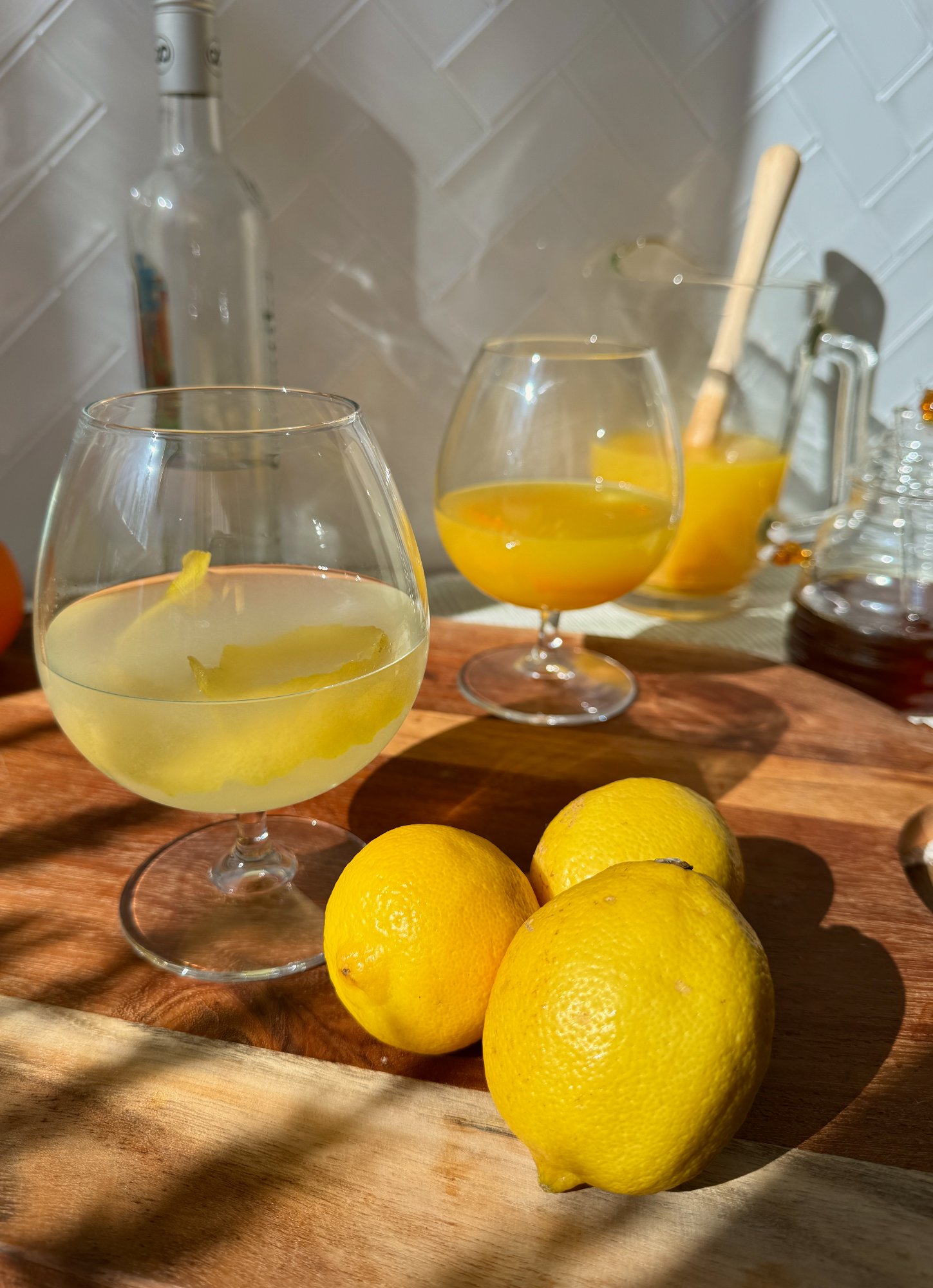
Poncha is one of Madeira’s most iconic drinks, originating long before my family ever called the island home. The traditional version from Câmara de Lobos combines citrus, sugar and sugarcane spirit, worked together until cloudy, bright and full of character. Câmara de Lobos is also where my grandparents lived, making every glass feel a little closer to my family’s Madeiran roots.
Because authentic Madeiran aguardente can be difficult to source in Australia, I use cachaça instead. While the classic lemon poncha remains the benchmark, the orange version is softer, sweeter and often the one that wins over first-time drinkers.
What I love most about poncha is that it never seems tied to a single season. In summer, it’s the kind of drink that belongs on a shaded patio as the afternoon stretches into evening. In winter, it’s often the bottle reached for when the weather turns cold and everyone gathers indoors. The bright citrus flavour feels just as welcome in July as it does in January, which is perhaps why it has remained a favourite for generations.
Whether you prefer the sharpness of lemon or the sweetness of orange, both versions deserve a place at the table.
Prep: 10 min · Yield: 2 Makes 2 generous drinks, one lemon and one orange-lemon · Cuisine: Portuguese · Category: Quick & Easy
Ingredients
Poncha à Pescador (Fisherman's Lemon Poncha)
- 4–5 strips lemon peel, mostly yellow zest
- 1 tbsp white sugar
- 60 ml fresh lemon juice
- 120 ml cachaça or sugarcane rum
- Ice, to serve
Poncha Regional (Orange and Lemon Poncha)
- 3 strips orange peel
- 2 strips lemon peel
- 1½ tbsp honey
- 80 ml fresh orange juice
- 40 ml fresh lemon juice
- 120 ml cachaça or sugarcane rum
- Ice, to serve
Method
- Place the lemon peel and sugar into a small jug.
- Muddle firmly with a wooden stick or the end of a wooden spoon until the peel looks glossy and fragrant.
- Add the lemon juice and muddle or stir until the sugar mostly dissolves.
- Add the cachaça and stir hard until the drink turns cloudy.
- Pour over ice in a clear glass.
- Serve straight away.
- Place the orange peel, lemon peel and honey into a small jug.
- Muddle firmly until the peel is glossy and the honey loosens.
- Add the orange juice and lemon juice.
- Stir or muddle until the honey is fully mixed through.
- Add the cachaça and stir hard until the drink turns cloudy.
- Pour over ice in a clear glass.
- Serve straight away.
About Madeiran Poncha
Poncha is the drink of Madeira, poured in tascas and homes across the island for well over two hundred years. Its name shares a root with the English word punch, both thought to come from the Indian panch, meaning five, after an early spiced drink of spirit, citrus, sugar and water that sailors are believed to have carried to the island.
Its heart in Madeira is tied to the sea. The original fisherman's poncha, Poncha à Pescador, is said to have been made in Câmara de Lobos by the fishermen's wives, worked together to warm their husbands' stomachs through cold nights on the water. The lemon and sweetness made it a comforting drink during the colder months, and it is still offered across Madeira for everything from a sore throat to a heavy heart. That working version, lemon, sugar and sugarcane spirit and nothing more, is the one closest to my grandparents' roots.
The spirit at its centre is aguardente de cana, a clear sugarcane spirit distilled in Madeira. The drink is protected under European law as Poncha da Madeira, and that protection rests on the use of genuine Madeiran rum. Outside the island that spirit is hard to find, so I make mine with cachaça, which is also distilled from sugarcane and carries the same bright, grassy strength. It is a deliberate Australian substitution for a protected original, and an honest one.
Traditionally the mixing is done with a caralhinho, a ridged wooden stick made for the job. The peel and sweetener are crushed against the base of the jug until the oils release, then the juice and spirit are worked in and stirred hard. Done properly, this does more than combine: it aerates the drink until it turns cloudy and almost creamy on top. That soft, frothy cloudiness is the mark of a poncha made by hand.
The regional version came later and softened the drink for a wider table. Where the fisherman's original leans on sugar, the regional adds orange juice and honey, rounding the sharp edges into a sweeter, gentler glass. Honey itself was once considered a modern touch by purists, which tells you how closely Madeira holds to the original. On this page you have both: the fisherman's poncha close to my family, and the softer version for everyday drinking.
Serving Suggestion
Poncha is a sipping drink, made one glass at a time and served the moment it turns cloudy. On the island it is poured into small glasses and set out with tremoços (lupini beans), for slow afternoons. If you are building a Madeiran or Portuguese spread around it, it sits beautifully next to Pastéis de Nata (Portuguese Custard Tarts) for something sweet, or Portuguese Bread Rolls (Papo Secos) still warm from the oven. For a longer table, Bifanas à Moda do Porto make a generous, savoury companion.
Storage and Make Ahead Notes
Poncha is made fresh and drunk fresh. It does not keep, because the citrus dulls and the ice waters it down within minutes. If you are serving a few people, prepare the peel strips and juice ahead, then muddle and mix each glass to order so every one is bright and cloudy.
Notes
Poncha is traditionally made with aguardente de cana, a Madeiran sugarcane spirit. In Australia, cachaça is a practical substitute because it is also distilled from sugarcane.
The fisherman's version is sharper and stronger. The regional version is softer, sweeter and more approachable.
Muddling the peel first releases the citrus oils and gives the drink its fragrant edge.
Keep the peel to mostly yellow or orange zest and avoid the bitter white pith underneath, which can turn the drink harsh.
Mix hard and for longer than feels necessary. The drink should turn cloudy and lift to a soft froth on top, which is the texture a caralhinho is designed to create.
This is an alcoholic drink for adults only.
The Grace Table Tip
Use a clear glass and muddle the peel first. The cloudiness, the citrus oils and the tiny flecks through the drink are part of what make poncha feel handmade rather than poured from a bottle.
Serve immediately over ice. Poncha is best freshly mixed, before the citrus dulls and the ice waters it down.