Lemon Tart (Tarte de Limão)
A no-bake lemon tart with a silky, mousse-like filling set over a buttery lemon shortbread base. Made with condensed milk, fresh lemon juice and cream, it has a smooth, creamy texture that gives a polite nod to cheesecake, but with a bright, full lemon tang. This is a tart for lemon purists: clean, sharp, creamy and make-ahead friendly.
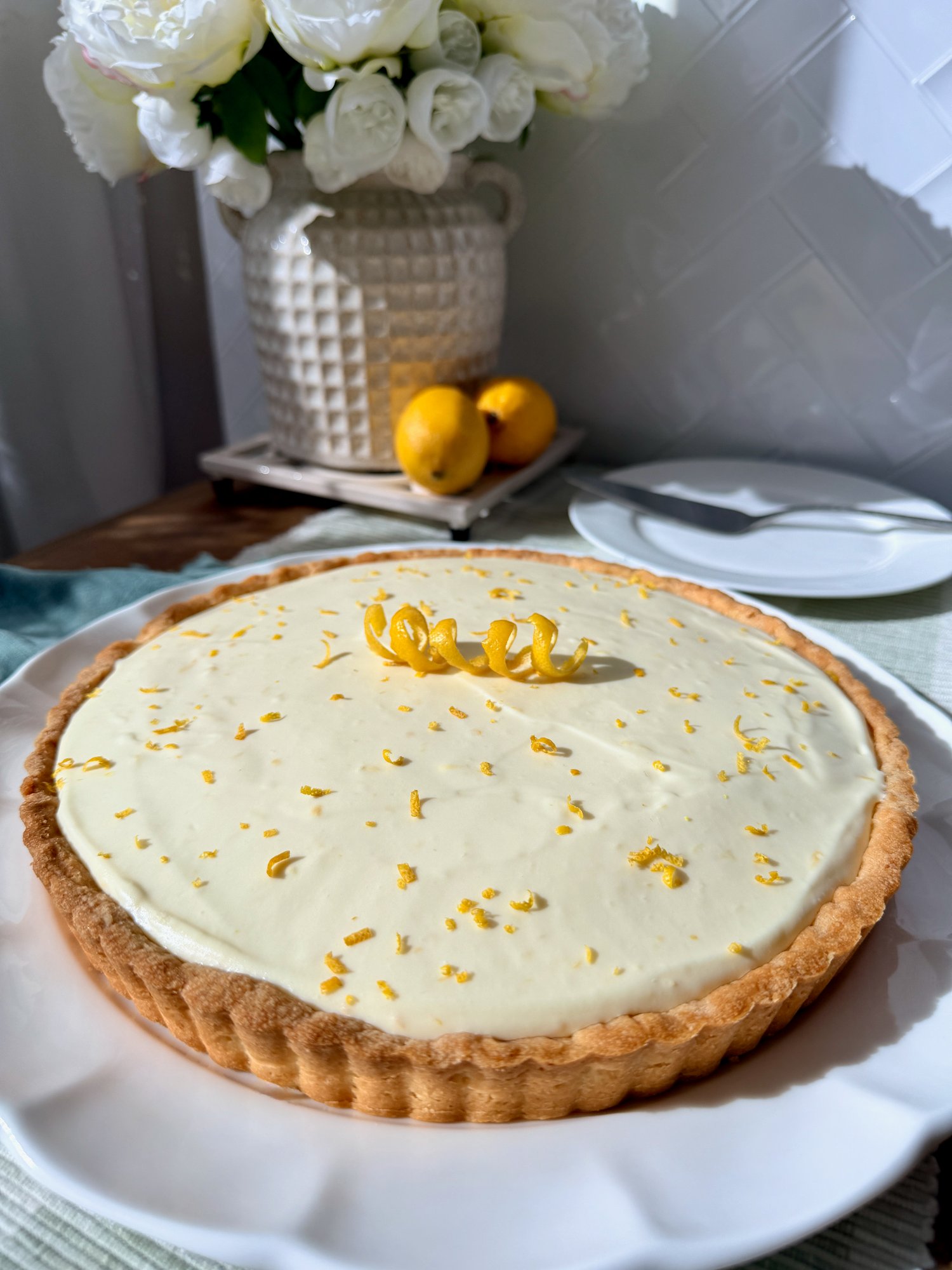
This lemon tart draws on the simple flavours and pantry staples I love in Portuguese home baking: condensed milk, fresh lemon, cream and a make-ahead dessert that can be brought to the table once everyone is ready.
It is not quite a cheesecake, though Australians who love a chilled cheesecake will recognise the smooth, creamy set. The difference is in the lemon. This is not a gentle hint of citrus. It is full-flavoured, bright and properly tangy, with lemon carried through both the filling and the shortbread base.
Developed and tested in my own kitchen, this version sets firm enough for clean, generous slices while keeping a silky, mousse-like texture. It is the kind of dessert you make the day before and serve cold, once the table is full and the coffee is ready.
Prep: 30 min · Cook: 25 min · Yield: 10 - 12 slices · Cuisine: Portuguese Australian · Category: Baking
Ingredients
Lemon Shortbread Base
- 250g plain flour
- 75g icing sugar
- 175g cold butter, cubed
- 1¼ tsp finely grated lemon zest
- Pinch of salt
Lemon Filling
- 1 x 395g tin sweetened condensed milk
- 175ml fresh lemon juice (about 4 to 5 lemons)
- Finely grated zest of 2 lemons
- 300ml thickened cream, cold, divided
- 4 tsp (about 13g) powdered gelatine
- 2 to 3 tbsp cold water, for blooming
Method
- Rub the butter into the flour, icing sugar, lemon zest and salt until the mixture resembles coarse crumbs and begins to clump together.
- Press firmly and evenly into the base and sides of a 25cm loose-bottomed tart tin.
- Prick the base all over with a fork, then chill for 30 minutes or freeze for 15 minutes until firm.
- Preheat the oven to 170°C.
- Line the chilled base with baking paper and fill with baking weights or dried beans.
- Blind bake for 15 to 20 minutes, until the sides are set and holding their shape.
- Remove the weights and paper, then bake uncovered for a further 5 to 10 minutes, until the base is pale gold all over, not just at the edges.
- Cool completely in the tin before filling. The base must be fully cold, not just cool to the touch.
- Sprinkle the gelatine over the cold water in a small bowl and leave for 5 minutes until spongy and fully absorbed.
- Whisk the condensed milk, lemon juice and zest together in a large bowl until smooth. The mixture will thicken slightly as the acid meets the milk.
- Warm about 60ml of the cream gently in a small saucepan until hot but not boiling. Stir in the bloomed gelatine until completely dissolved and clear, with no granules remaining. Leave to cool until barely warm.
- Whip the remaining cream to soft peaks.
- Pour the warm gelatine cream into the condensed milk and lemon mixture in a steady stream, whisking constantly to disperse it evenly.
- Fold the whipped cream through in two additions, gently, until just combined with no streaks. Work fairly quickly, as the mixture begins to set as it cools.
- Pour into the cooled, fully set shortbread base. Level the surface and tap the tin gently on the bench to settle.
- Chill for a minimum of 4 hours, or overnight for the best set and easiest slice.
Serving Suggestion
Serve this tart cold from the fridge with freshly brewed coffee or tea. It is lovely after a long family lunch, especially when you want something creamy but bright enough to cut through a generous meal.
For a Portuguese-inspired dessert spread, serve it alongside freshly baked Pastéis de Nata (Portuguese Custard Tarts). For a citrus-forward table, pair it with Whole Orange Olive Oil Cake.
Storage Notes
Store covered in the fridge for up to 3 days. The tart is at its best within the first two days, when the shortbread is at its shortest and the filling its silkiest.
Not suitable for freezing, as the filling can weep on thawing.
Notes
Whisk the warm gelatine cream into the condensed milk mixture before folding in the whipped cream. Adding warm gelatine directly to cold whipped cream can create tiny rubbery threads instead of a perfectly smooth filling.
If the filling feels soft after 4 hours, give it longer before judging the set. The full firm slice depends on a proper chill, and rushing this step is the most common reason a no-bake filling seems too soft.
A fully cooled, fully baked base matters more than it seems. Filling a warm or underbaked shortbread is the most common cause of a soggy base in a tart like this one.
This tart is intentionally lemon-forward. It is not a soft whisper of lemon; it should taste bright, tangy and full.
The Grace Table Tip
Zest the lemon curls just before serving, not when the tart goes into the fridge. Fresh zest stays bright and fragrant, while zest left sitting overnight dulls in colour and loses its oils. For the cleanest slice, dip your knife in hot water and wipe it dry between each cut.
This tart is intentionally shallow, around 2cm deep. The texture is smooth and creamy, with a set that nods gently to a chilled cheesecake, but the flavour is firmly lemon-first. A deeper fill will need a longer chill time to set fully.