Lemon Ricotta Fettuccine
Fresh ricotta whipped with lemon zest, Parmesan and olive oil, tossed through hot fettuccine until glossy. Pasta water does the work of cream, so the sauce stays light rather than heavy. Ready in the time it takes to boil the pasta.
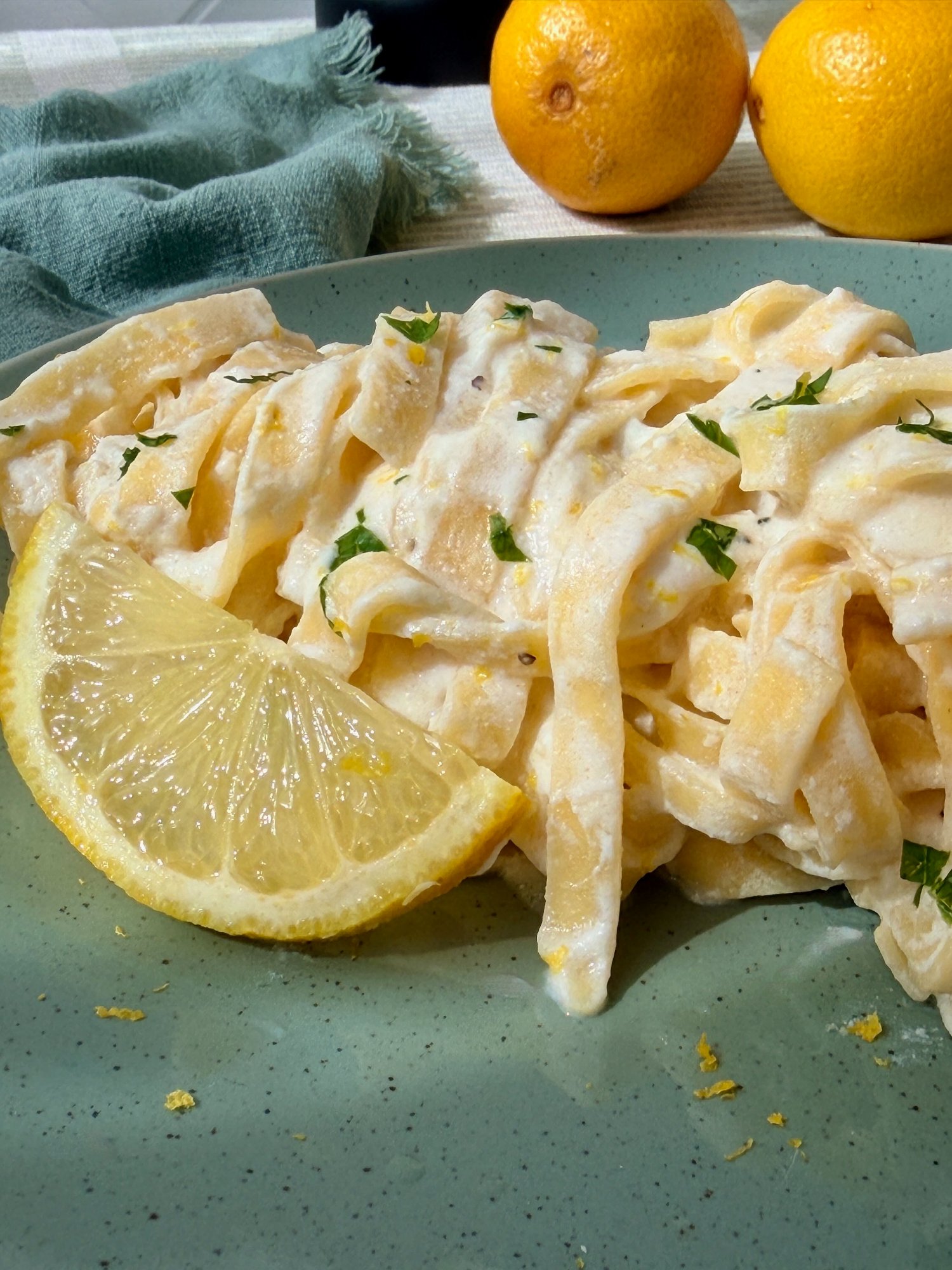
Warm weather cooking at our table leans on whatever is already in the fridge, and a tub of fresh ricotta is usually where it starts. Zest a lemon into it, grate in Parmesan and a single clove of garlic, pour in good olive oil, and the sauce is finished before the water has even come to the boil.
The garlic is not optional in my kitchen. Grated finely and left to sit in the ricotta while the pasta cooks, it softens into the cheese and loses its raw edge without ever seeing a pan. Leave it out and the bowl tastes pleasant, but a little flat.
The pasta water is the other half of it. Added a splash at a time while tossing, it loosens the ricotta into something silky that clings to every ribbon of fettuccine. The lemon juice goes in last, off the heat, so it stays bright rather than cooking away.
Dinner that comes together in twenty minutes and still feels considered earns its place on a Tuesday as easily as a Saturday.
Prep: 10 min · Cook: 10 min · Serves: 4 · Cuisine: Italian · Category: Pasta
Ingredients
Lemon Ricotta Fettuccine
- 350g dried fettuccine
- 250g fresh ricotta
- 1 large lemon, zest and juice
- 40g Parmesan, finely grated
- 2 tbsp extra virgin olive oil
- 1 garlic clove, finely grated
- Salt and freshly cracked black pepper
- ¼–½ cup reserved pasta water
To Finish
- Extra Parmesan, finely grated
- Fresh basil or flat-leaf parsley, torn
- Freshly cracked black pepper
- A drizzle of good extra virgin olive oil
Method
- Bring a large pot of well salted water to the boil and cook the fettuccine until al dente.
- While the pasta cooks, combine the ricotta, lemon zest, Parmesan, olive oil and grated garlic in a large bowl. Season generously with salt and pepper and set aside.
- Reserve ½ cup of the pasta water before draining.
- Add the hot pasta straight into the ricotta mixture. Toss continuously, adding the pasta water a splash at a time, until the sauce turns silky and coats every strand.
- Stir through 1–2 tablespoons of lemon juice to taste, off the heat.
- Serve straight away with extra Parmesan, plenty of black pepper, torn herbs and a final drizzle of olive oil.
Serving Suggestion
A green salad is all this really needs alongside, and Greek Style Salad with Feta, Olives & Garlic does the job with almost no extra work while the pasta cooks. For something warm, Garlic Chilli Lemon Broccolini or Charred Asparagus with Lemon & Feta both pick up the lemon already in the sauce. A torn piece of Simple Rosemary Focaccia is worth having on the table for the last of the olive oil in the bowl. To turn it into a fuller meal, fold a handful of baby spinach or fresh peas through at the end, scatter over toasted pine nuts, or add sliced grilled chicken or hot smoked salmon.
Storage Notes
Best eaten the moment it is tossed, while the sauce is still glossy. Leftovers keep in an airtight container in the fridge for up to two days. Reheat gently in a pan over low heat with a splash of water or milk, stirring until it loosens back into a sauce. The microwave tends to tighten the ricotta and dry it out.
Notes
Ricotta varies a great deal between brands. If the tub is very wet, tip it into a sieve for ten minutes before using, otherwise the sauce will stay loose no matter how little pasta water goes in.
Grate the garlic rather than chopping it. A fine grate disappears into the ricotta while the pasta cooks; chopped pieces stay sharp and catch in the sauce.
Reserve more pasta water than you think you need. It should be cloudy and well salted, and half a cup is the minimum for this quantity.
Add the lemon juice at the very end, off the heat. Acid stirred into hot ricotta too early can turn the sauce grainy.
The Grace Table Tip
Ricotta straight from the fridge stiffens the sauce the moment hot pasta hits it. Rest the mixing bowl on top of the pasta pot while the water comes to the boil so the ricotta is barely warm by the time you toss everything together, and serve into warmed bowls. The sauce holds its gloss far longer that way.
Fettuccine holds this sauce best, though tagliatelle, linguine or spaghetti all work well. Short shapes are worth avoiding, as the sauce slips off and pools at the bottom of the bowl.