Korean Beef Rice Bowls
Sticky Korean-inspired beef mince cooked with garlic, ginger and gochujang, served over fluffy jasmine rice with crisp julienned carrot and cucumber. A drizzle of spicy mayo pulls it together. Thirty minutes from start to table, and everyone builds their own bowl.
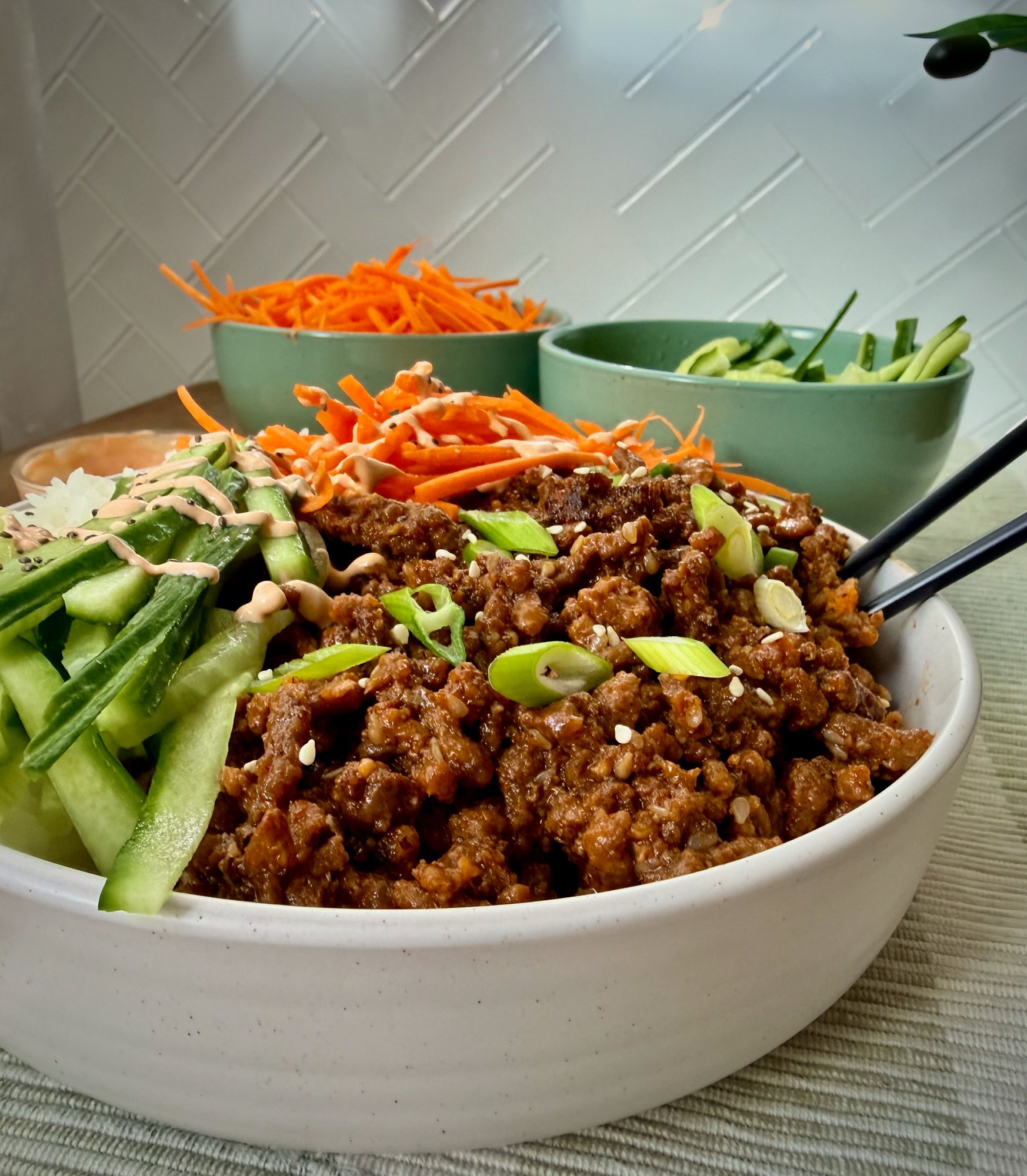
Build-your-own dinners settle everyone at the table faster than almost anything else I cook. The bowls go down, the pan of beef sits in the middle glossy and still steaming, and the reaching starts: extra cucumber for one, a heavier hand with the spicy mayo for another, someone taking all the spring onion.
The beef itself is Korean-inspired rather than traditional, built on gochujang for warmth and depth, brown sugar for stickiness and rice vinegar to keep the whole thing from tipping too sweet. Gochujang is worth buying properly. A good jar carries a slow, fermented heat that sits behind the savouriness instead of shouting over it, and it does more for this dish than any other single ingredient.
What makes it work on a weeknight is that nothing has to be plated. The rice cooks while the vegetables are cut, the beef takes fifteen minutes in one pan, and everything goes to the table in bowls to be assembled. Fifteen minutes at the stove, and the rest of the evening belongs to everyone else.
Prep: 15 min · Cook: 15 min · Serves: 6 · Cuisine: Korean · Category: Dinner
Ingredients
Korean Beef
- 1kg lean beef mince
- 1 tbsp olive oil
- 4 garlic cloves, minced
- 1 tbsp fresh ginger, grated
Sauce
- ⅓ cup light soy sauce (80ml)
- 3 tbsp brown sugar
- 2½ tbsp gochujang (or 2 tbsp for a milder flavour)
- 1½ tbsp rice vinegar
- 2 tsp sesame oil
- ½ cup water (125ml)
Thickener
- 1 tbsp cornflour
- 2 tbsp cold water
Spicy Mayo
- ¾ cup whole egg mayonnaise
- 2 tbsp sriracha
- 1 tsp lime juice (optional)
To Serve
- 6 cups cooked jasmine rice (about 2 cups uncooked)
- 3 carrots, julienned
- 1 large Lebanese cucumber (or 2 small), julienned
- 4 spring onions, thinly sliced
- Sesame seeds
Method
- Heat the olive oil in a large frying pan over medium-high heat. Give the pan a minute to come up properly. The oil should shimmer and move easily across the base before the beef goes anywhere near it.
- Add half the beef mince and press it into a single even layer. Leave it undisturbed for 2 to 3 minutes so the underside browns and catches. One kilogram of mince added all at once will crowd the pan, drop the temperature and steam rather than brown, which costs the dish most of its savoury depth.
- Break the browned mince up with a wooden spoon and push it to one side of the pan. Add the remaining mince, press it flat, and repeat: 2 to 3 minutes undisturbed, then break up and stir the two batches together. Cook for a further 2 minutes until no pink remains.
- Tilt the pan and spoon off any pooled fat. Lean mince rarely releases much, but the sauce clings better to beef that is not sitting in liquid fat.
- Reduce the heat to medium. Stir through the garlic and ginger and cook for 45 seconds to 1 minute, moving constantly, until fragrant. Both burn quickly against a hot pan base, and burnt garlic will carry through the finished sauce.
- Whisk the soy sauce, brown sugar, gochujang, rice vinegar, sesame oil and water together in a jug before they go anywhere near the pan. Gochujang is thick and stubborn, and it will sit in clumps against hot mince if it is added straight to the pan. Whisk until the mixture is smooth and evenly coloured with no paste visible on the sides of the jug.
- Pour the sauce over the beef and stir well to coat. Bring to a gentle simmer.
- Simmer for 3 to 4 minutes, stirring occasionally, until the sauce has reduced slightly and darkened. It will still look thin at this stage, which is correct.
- Taste before thickening. If it reads too sweet, add a splash more rice vinegar. If it is sharper than you want, add a teaspoon of brown sugar. Gochujang varies noticeably in heat and saltiness between brands, so this is the moment to adjust rather than after thickening.
- Whisk the cornflour and cold water together in a small bowl until completely smooth with no lumps. Cold water only: cornflour seizes in warm water and will go grainy.
- Whisk the slurry again immediately before using. Cornflour settles to the bottom within a minute or two of sitting, and pouring off the top adds water without thickening power.
- Pour the slurry into the simmering beef in a steady stream, stirring continuously. Keep stirring for 1 to 2 minutes until the sauce turns glossy and coats the mince rather than pooling around it. Drawing the spoon across the base of the pan should leave a clear trail that holds for a moment.
- Remove from the heat. The sauce continues to thicken as it sits, so pull it slightly looser than you want it on the plate.
- Combine the mayonnaise, sriracha and lime juice, if using, in a small bowl. Stir until the colour is even and no streaks of sriracha remain.
- Cover and refrigerate until serving. The flavour settles and mellows slightly after twenty minutes in the fridge, so this is the first thing to make and the last thing to touch.
- Cook the jasmine rice while the vegetables are prepared, and keep it covered and warm until serving.
- Julienne the carrot and cucumber into matchsticks roughly the length of your thumb. Cut the cucumber last and keep it chilled: it softens and weeps once cut, and its whole job in the bowl is crunch against the sticky beef.
- Divide the warm rice between six bowls, spreading it across the base rather than mounding it in the centre.
- Arrange the carrot and cucumber along one side of each bowl in their own sections, keeping them distinct rather than tossed together.
- Spoon the Korean beef over the remaining section of the bowl, letting some of the glossy sauce run down onto the rice.
- Finish with sliced spring onions, a scatter of sesame seeds and a generous drizzle of spicy mayo. Serve immediately, while the rice is hot and the vegetables are cold.
Serving Suggestion
These bowls hold their own without anything else on the table, but a second vegetable dish makes them stretch further when you are feeding a crowd. Crunchy Asian Cabbage Slaw works particularly well alongside, adding volume without competing with the sesame and ginger already in the beef. For something warm on the side, Garlic Chilli Lemon Broccolini brings a little sharpness that cuts through the sticky sauce. If you are laying out a larger spread, Rainbow Ribbon Salad with Sesame, Chilli & Lime picks up the same flavour family and looks generous down the middle of the table.
Storage Notes
Store the beef, rice and vegetables in separate containers in the refrigerator. The beef keeps for up to 3 days and reheats well in a pan over medium heat with a tablespoon of water to loosen the sauce, which tightens as it chills. Cooked rice keeps for up to 3 days and is best refreshed with a splash of water under a lid. Cut cucumber and carrot are best used within 2 days, and the cucumber will soften noticeably after the first day. The cooled beef also freezes well for up to 3 months. Thaw overnight in the refrigerator before reheating.
Make Ahead Notes
The spicy mayo can be made up to 3 days ahead and kept covered in the refrigerator. Carrots can be julienned a day ahead and stored in an airtight container. The full beef mixture can be cooked a day ahead and reheated gently, which suits a busy night or a gathering where you want the stove free.
Notes
Gochujang brands vary considerably in heat and salt. Start at 2 tablespoons if you are cooking for children or working with an unfamiliar jar, and taste the sauce before thickening.
Lean mince is the right choice here because the sauce is already rich. Fattier mince will need draining properly after browning, or the sauce will sit slick on the surface rather than clinging to the beef.
Pork, chicken or turkey mince all work in place of beef. Chicken and turkey brown faster and more lightly, so watch the pan and reduce the browning time by a minute or so.
Brown rice, short grain rice or even rice noodles all take the beef well if jasmine is not what you have. Whatever you use, it needs to be hot when the bowls are built.
If you want more vegetables in the bowl, thinly sliced red capsicum, shredded wombok or blanched green beans all sit comfortably alongside the carrot and cucumber.
The Grace Table Tip
Bring the pan of beef to the table with the rice, vegetables and mayo in separate bowls and let everyone assemble their own. It removes the plating step entirely, and it means the fussier eaters at the table get exactly what they want without a negotiation. Put the spicy mayo in a small jug or a squeeze bottle so the drizzle lands where it is wanted rather than in a single spoonful.
Once opened, gochujang keeps in the refrigerator for up to a year with the surface pressed flat and the lid sealed. It is worth buying a full tub rather than a small sachet, since it earns its place in marinades, dressings and soups long after this recipe.