How to Dye Eggs for Easter Bread
A simple way to dye eggs at home using food colouring. Soft, natural colours that are perfect for Easter baking and traditional breads.
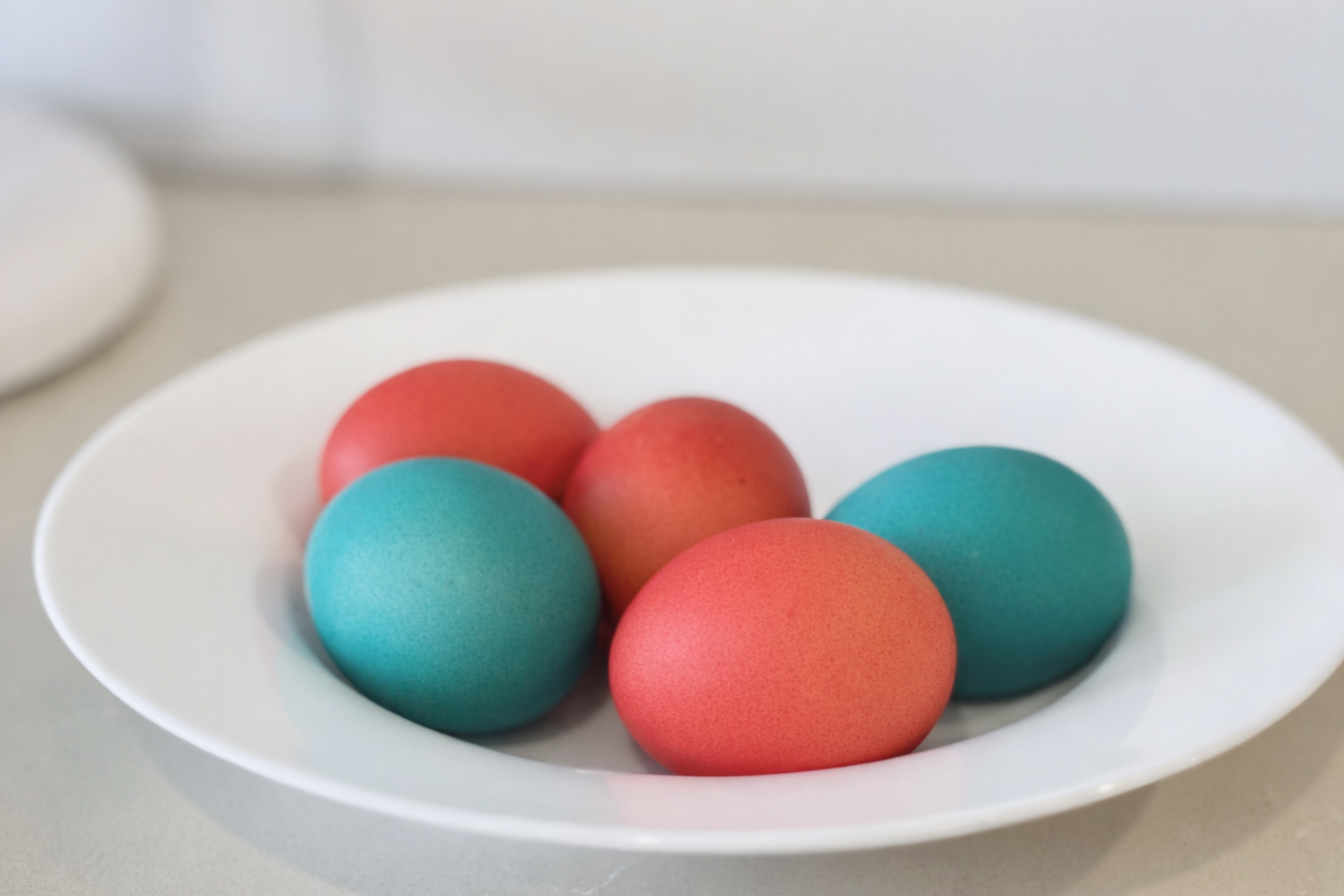
Eggs have always been part of Easter baking.
Dyed simply at home, they bring a quiet sense of tradition to the table. The colours do not need to be perfect or uniform. In fact, the softer and more uneven they are, the more beautiful they feel.
These are the eggs that sit at the centre of the bread, marking the occasion in the simplest way.
Prep: 5 min · Cook: 10 min
Ingredients
Egg
- Eggs
- Water
- Food colouring
- 1–2 tbsp white vinegar
Method
- Place eggs in a saucepan and cover with cold water. Bring to a gentle boil, then reduce heat and simmer for 8–10 minutes. Remove and allow to cool slightly.
- In separate cups or bowls, add: warm water a few drops of food colouring a splash of vinegar The vinegar helps the colour adhere to the shell.
- Gently lower the eggs into the dye. Leave for a few minutes for soft colour, or longer for a deeper tone.
- Remove and place on paper towel or a rack to dry. Avoid rubbing, as the colour can mark while still wet.
Notes
The longer the eggs sit in the dye, the deeper the colour will be
Small variations and uneven colour are part of the charm
Some colour may transfer slightly during baking, especially when used in bread
Let eggs dry fully before using
Serving Suggestion
Perfect for placing into dough before baking, especially in traditional breads like Portuguese Easter Bread (Folar da Páscoa).
The Grace Table Tip
Keep the colours soft rather than overly bright. A lighter hand with the dye gives a more natural, timeless finish that sits beautifully in your baking.