Honey Mustard Pork Chops
Golden pan-seared pork chops finished in a sticky honey mustard glaze with garlic, thyme and a splash of apple cider vinegar. A simple stovetop dinner with caramelised edges and plenty of savoury-sweet pan glaze for spooning over the top.
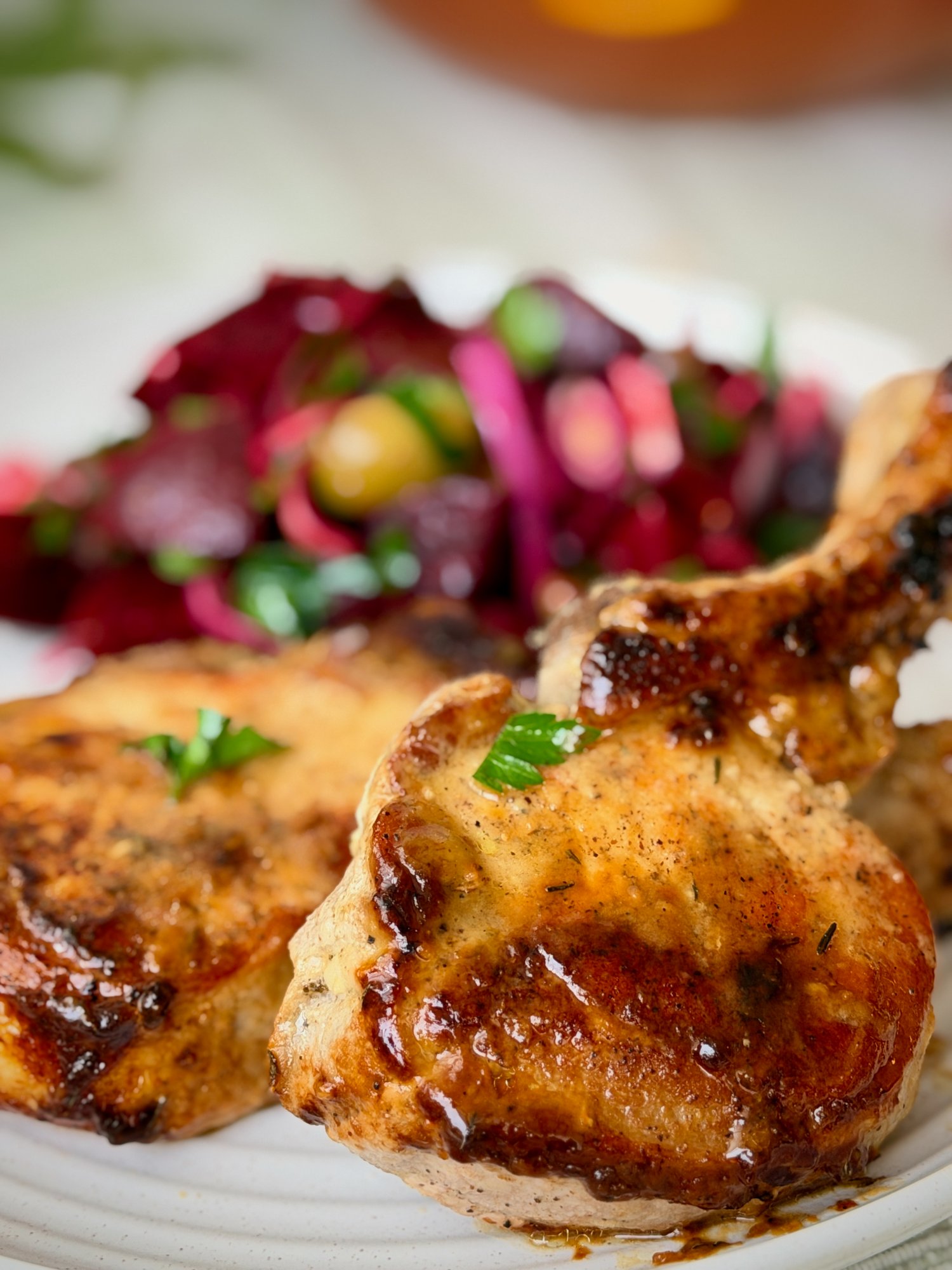
Pork chops reward a little patience at the start. Left on the bench for a few minutes and patted properly dry, they meet the hot pan with a gentle hiss and come away deeply golden. From there, the glaze does most of the work. Honey, Dijon, garlic and thyme go straight into the pan with all the browned bits left behind, and a splash of apple cider vinegar keeps the sweetness beautifully balanced. By the time the chops have rested, there is a glossy, sticky sauce waiting to be spooned over the top, and dinner is on the table with very little fuss.
Prep: 10 min · Cook: 10 min · Serves: 3 · Cuisine: Australian · Category: Pork
Ingredients
Honey Mustard Pork Chops
- 3 pork loin chops, approximately 2–3 cm thick
- 1 tbsp olive oil
- ½ tsp salt
- ¼ tsp freshly ground black pepper
Honey Mustard Glaze
- 1½ tbsp Dijon mustard
- 1½ tbsp honey
- 1 tbsp olive oil
- 1 tbsp apple cider vinegar
- 2 garlic cloves, minced
- ½ tsp dried thyme
- ¼ tsp salt
- Freshly ground black pepper
Method
- Remove the pork chops from the fridge and allow them to sit at room temperature for 15–20 minutes.
- Pat the pork chops dry and season with the salt and black pepper.
- Combine all of the honey mustard glaze ingredients in a small bowl and set aside.
- Heat the olive oil in a large frying pan over medium-high heat.
- Add the pork chops and sear without disturbing them for 3–4 minutes, until deeply golden underneath.
- Turn the chops and cook for a further 2–3 minutes on the second side.
- Reduce the heat to medium-low. Do not clean the pan. Add the honey mustard glaze directly to the pan, allowing it to mingle with the pork juices and browned bits.
- Turn and baste the pork chops in the glaze for a further 2–4 minutes, until the glaze is glossy and caramelised and the pork reaches an internal temperature of 63°C.
- Remove the pork chops from the pan and rest for 5 minutes.
- Spoon the sticky honey mustard pan glaze over the pork chops before serving.
- Add the Dijon mustard, honey, olive oil, apple cider vinegar, garlic, dried thyme, salt and black pepper to a small bowl.
- Stir until thoroughly combined.
- Add to the pan only after the pork chops have been seared on both sides, then turn and baste the chops as the glaze reduces around them.
Serving Suggestion
These are lovely served alongside Mediterranean Beetroot & Olive Salad, where the earthy beetroot and salty olives sit beautifully against the sweetness of the glaze. Spoon the sticky pan juices over the pork just before it comes to the table.
Storage Notes
Store leftover pork chops in an airtight container in the fridge for up to 3 days. Keep any remaining pan glaze with the pork so the meat stays as moist as possible when reheated.
Make Ahead Notes
The honey mustard glaze can be mixed ahead and kept covered in the fridge until needed. Let it come back towards room temperature while the pork chops sit out before cooking.
Notes
Use pork loin chops approximately 2–3 cm thick. The cooking times were tested with chops of this thickness.
Allow the pork to sit out for 15–20 minutes, then pat it dry before seasoning. A dry surface gives the chops their deep golden sear.
Leave the pan uncleaned after searing. The browned pork juices become part of the sticky, garlicky glaze.
Reduce the heat before adding the glaze, then turn and baste the chops as it thickens and caramelises around the meat.
Cook the pork to an internal temperature of 63°C, then rest for 5 minutes before serving. Spoon the glaze remaining in the pan over the rested pork chops.
The Grace Table Tip
Keep all those golden bits in the bottom of the pan after searing. Once the honey mustard mixture goes in, they lift into the glaze and give the finished sauce so much more depth.
The glaze grows stickier as it reduces. Keep the heat at medium-low once it goes in so the honey caramelises gently without catching before the pork is cooked through.