Hearty Family Lasagna with Rich Meat Ragù
A comforting homemade lasagna layered with a rich beef and pork ragù, silky béchamel sauce, and plenty of melted cheese. This family-style lasagna is deeply savoury, generously meaty, and perfect for feeding a table full of people.
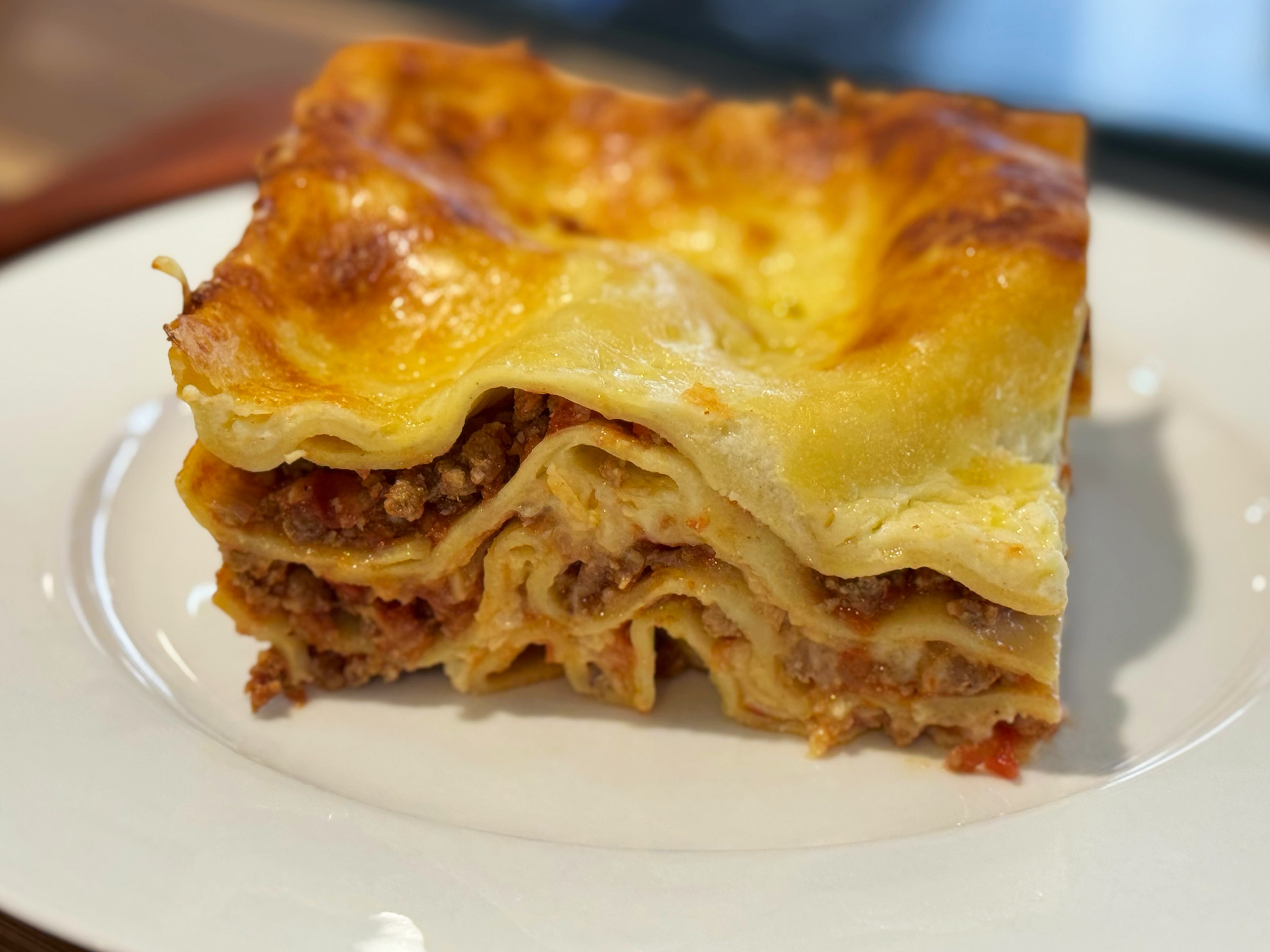
This lasagna recipe comes from years of cooking for large family dinners and gatherings with friends. Over time, the sauce evolved into a rich, hearty ragù that people always come back for.
The sauce is intentionally heavy on the meat, giving it a deep savoury flavour and a satisfying texture that layers beautifully between sheets of pasta. As it slowly simmers, the tomatoes reduce and develop a gentle sweetness that balances the richness of the beef and pork.
I often make a large batch of this sauce because it’s just as good tossed through pasta the next day. A good ragù is one of those kitchen staples that always earns its place on the table.
Finished with bubbling cheese and a golden top, this lasagna is the kind of dish that fills the house with incredible aromas and brings everyone back for seconds.
Prep: 25 min · Cook: 110 min · Cuisine: Italian · Category: Dinner
Ingredients
Meat Sauce
- 2 yellow onions, diced
- 3 large garlic cloves
- 500 g pork mince
- 1 kg beef mince
- Olive oil
- Salt
- Black Pepper
- 2 tablespoons tomato paste
- 4 × 400 g cans diced Italian tomatoes
- 1 can water (using an empty tomato can for measurement)
Béchamel Sauce
- 80 g butter
- 4 tablespoons plain flour
- 4 cups milk (room temperature)
- 1 teaspoon salt
- ½ teaspoon white pepper
For Assembling
- Fresh lasagna sheets (about 250–300 g, depending on the size of your dish)
Optional Cheese Layer
- Grated mozzarella
- Grated cheese for topping (mozzarella or a mozzarella/cheddar blend)
Method
- In a large saucepan or pot over medium-high heat, cook the pork mince and beef mince until well browned. Remove the cooked meat from the pot and set it aside, then carefully drain off the excess fat. Return the pot to the heat and add a drizzle of olive oil. Add the diced onions and garlic and cook until softened and fragrant. Stir in the tomato paste and cook it with the onions and garlic until the paste deepens to a rich red colour. This step helps build depth of flavour in the sauce. Add the diced tomatoes and bring the sauce to a gentle simmer. Return the browned meat to the pot and stir well to combine. Fill one empty tomato can with water and add it to the sauce. Reduce the heat and allow the sauce to simmer gently for up to 1 hour, stirring occasionally and checking that the sauce does not become too dry. The finished ragù should be thick, rich and dense with meat.
- In a saucepan over medium heat, melt the butter. Add the flour and cook while stirring until the butter absorbs the flour and forms a smooth paste resembling soft peanut butter. Slowly pour in the room-temperature milk while whisking constantly to prevent lumps from forming. Continue heating gently while whisking until the sauce thickens. Season with the salt and white pepper. If the sauce rests before assembling the lasagna, it may develop a thin skin on the surface. This is normal, a quick whisk will bring it back to a smooth consistency.
- Preheat the oven to 180°C fan forced. Spread a thin layer of meat sauce over the base of a rectangular baking dish. This prevents the first layer of pasta from sticking. Add a layer of fresh lasagna sheets, trimming them to fit the dish with minimal overlap. Spread an even layer of meat sauce over the pasta sheets. Add a thin layer of béchamel sauce. Lightly sprinkle grated cheese over the top. Repeat the layers — pasta, meat sauce, béchamel and cheese — until the dish is full. Finish with a final layer of pasta sheets topped with a generous layer of béchamel and plenty of grated cheese.
- Bake for about 45 minutes, or until the top is golden and the lasagna is bubbling around the edges. Remove from the oven and allow the lasagna to rest for 10 minutes before slicing. This resting time allows the layers to settle so the lasagna holds together beautifully when served.
Notes
Make extra ragù This sauce freezes beautifully. I often make a large batch and keep some aside for quick pasta dinners later in the week.
Let the sauce reduce properly A good lasagna relies on a thick, rich meat sauce. Allow the ragù to simmer until it becomes dense and concentrated. If the sauce is too watery, the layers can slide apart when serving.
Room temperature milk helps the béchamel Adding room temperature milk while whisking helps prevent lumps and creates a smoother sauce.
The béchamel may form a skin If the white sauce rests before assembling the lasagna, it may develop a thin skin on the surface. This is completely normal — a quick whisk will bring it back together.
Rest the lasagna before slicing Allow the lasagna to rest for about 10 minutes after baking. This helps the layers settle so you can cut clean slices that hold together on the plate.
Cheese between the layers is optional I like to add a light sprinkle of cheese between layers for extra richness, but the lasagna works beautifully relying on the ragù and béchamel alone.
Make Ahead & Storage
Make ahead
Lasagna is a wonderful dish to prepare ahead of time. You can assemble the lasagna completely, cover it well, and refrigerate it for up to 24 hours before baking. When ready to cook, bake as directed.
Freezing before baking
The assembled lasagna can also be frozen before baking. Wrap the dish tightly with foil and freeze for up to 3 months. Thaw overnight in the refrigerator before baking.
Freezing leftover ragù
The meat ragù freezes beautifully. I often make a large batch and freeze portions for quick pasta dinners during the week.
Storing leftovers
Leftover lasagna can be stored in the refrigerator, covered, for 3–4 days.
Reheating
Reheat slices in the oven or microwave until heated through. A small splash of water or extra sauce helps keep the lasagna moist when reheating.