Chicken Cacciatore
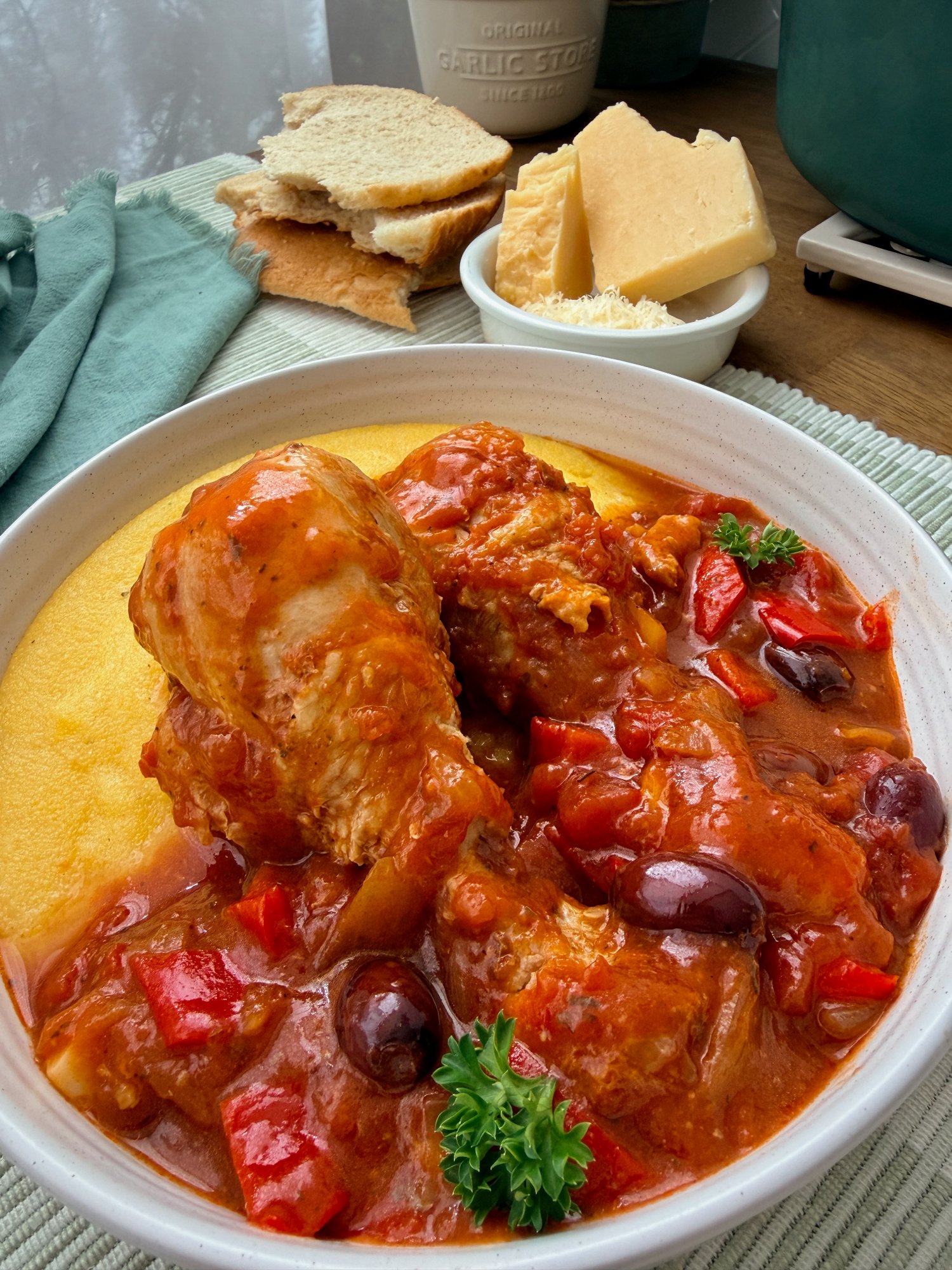
Tender braised chicken, red capsicum and Kalamata olives simmer in a rich tomato and white wine sauce finished with butter and Parmesan. Serve it over creamy polenta for a generous Italian-inspired dinner made for cooler evenings.
Prep: 30 min · Cook: 120 min · Serves: 8 · Cuisine: Italian · Category: Dinner
Ingredients
Chicken Cacciatore
- 1 kg bone-in chicken legs
- 1 kg chicken breast fillets
- 2 teaspoons fine sea salt, divided
- 1 teaspoon freshly ground black pepper
- 2 tablespoons olive oil, as needed
- 2 large brown onions, halved and cut into thick slices
- 2 large red capsicums, deseeded and cut into 2–3 cm pieces
- 6 large garlic cloves, finely chopped
- 70 g tomato paste
- 250 ml dry white wine
- 800 g crushed tomatoes
- 250 ml chicken stock
- 2 teaspoons dried oregano
- 1 teaspoon dried thyme
- 2 bay leaves
- ½ teaspoon freshly ground black pepper
- 1 teaspoon brown sugar
- 180 g pitted Kalamata olives, drained
- 30 g cold unsalted butter, cubed
- 40 g finely grated Parmesan
- 1 large handful fresh basil leaves
Method
- Preheat the oven to 180°C fan-forced.
- Pat the chicken dry with paper towel. If the chicken breast fillets are particularly large, cut them crossways into two or three large pieces rather than small chunks. Season the chicken with 1½ teaspoons of the salt and 1 teaspoon black pepper.
- Heat a large Dutch oven over medium-high heat. Add 1 tablespoon of the olive oil, then brown the chicken legs in batches for 6–8 minutes on the first side and about 2 minutes on the second, until deeply golden. Transfer to a large plate.
- Add a little more olive oil if needed. Brown the chicken breast pieces for about 2 minutes on each broad side. They will still be raw in the centre. Transfer to the plate with the chicken legs.
- Reduce the heat to medium. Spoon away any significant excess fat, leaving about 2 tablespoons in the Dutch oven. Add the onions, capsicum and remaining ½ teaspoon salt.
- Cook for 10–12 minutes, stirring regularly and scraping the browned chicken flavour from the base of the pot. The onions should be soft and beginning to colour at the edges, and the capsicum should have started to soften.
- Add the garlic and cook for 1 minute. Stir in the tomato paste and cook for 3–4 minutes, pressing it across the base of the Dutch oven as you stir. Continue until the paste darkens to a deep brick red and begins to leave a sticky film on the pot.
- Pour in the white wine and increase the heat to medium-high. Scrape the base of the Dutch oven thoroughly, then allow the wine to bubble for 5–7 minutes, until reduced by about two-thirds.
- Add the crushed tomatoes, chicken stock, oregano, thyme, bay leaves, remaining ½ teaspoon black pepper and brown sugar. Stir well, bring to a gentle simmer and cook uncovered for 5 minutes.
- Nestle the chicken legs and breast pieces into the sauce. Keep the chicken legs facing upwards where possible and spoon a little sauce over the chicken breast. Pour any juices from the plate into the Dutch oven.
- Cover with the lid and transfer to the oven. Braise for 1 hour, until the chicken legs are tender and the meat yields easily when tested near the joint.
- Remove the lid and scatter the Kalamata olives through the sauce. Return the Dutch oven to the oven, uncovered, for 20 minutes. The sauce should darken and reduce around the chicken.
- Carefully transfer the chicken to a large warm platter. Remove and discard the bay leaves.
- Place the Dutch oven over medium heat. Simmer the sauce for 5–10 minutes, stirring regularly, until rich and glossy. When a wooden spoon is drawn across the bottom of the pot, the sauce should briefly leave a trail before slowly flowing back.
- Reduce the heat to low. Stir in the cold butter a few cubes at a time until incorporated, then add the finely grated Parmesan and stir until it has completely disappeared into the sauce. Do not allow the sauce to boil aggressively after adding the Parmesan.
- Tear half of the basil leaves into the sauce. Taste and adjust the seasoning only now, allowing for the saltiness of the Kalamata olives and Parmesan.
- Return the chicken to the Dutch oven and spoon the sauce around it. Finish with the remaining fresh basil and serve hot.
About This Cacciatore
Cacciatore means hunter-style in Italian, and the name is less about one fixed recipe than a rustic style of cooking. Across Italy, cacciatore dishes vary by region and household, often bringing together meat, aromatics, herbs and wine in a slow-cooked sauce built from what was available.
Some versions use red wine, some white. Tomatoes appear heavily in some recipes and much more lightly in others. Olives, capsicum and mushrooms can all move in and out depending on the cook and the region.
For this version, dry white wine was chosen deliberately. The sauce already carries plenty of depth from deeply browned chicken, caramelised tomato paste, Kalamata olives and a long oven braise. White wine lifts the sauce and brings acidity without adding the heavier, darker character that red wine can give.
Reduced properly before the tomatoes are added, the wine should not taste sharp or obvious. It becomes part of the sauce, helping balance the richness and allowing the tomato, capsicum and herbs to stay bright.
Serving Suggestion
Serve Chicken Cacciatore over Creamy Polenta, Our Family Milho Method, letting the soft polenta catch plenty of the rich tomato sauce. It is also lovely with mashed potato or wide buttered pasta, with bread at the table for the last of the sauce and Parmesan for grating over individual servings.
Storage Notes
Cool leftovers and refrigerate in an airtight container for up to 3 days. Reheat gently on the stovetop or in a covered dish in the oven until piping hot, adding a small splash of chicken stock if the sauce has thickened more than you would like. The cacciatore can also be frozen for up to 3 months. Freeze the chicken and sauce together, then thaw in the refrigerator before reheating gently.
Make Ahead Notes
Chicken Cacciatore is an excellent make-ahead dinner and the sauce settles beautifully overnight. Prepare the full cacciatore a day ahead, refrigerate once cooled, then reheat gently before serving. Make polenta, mashed potato or pasta fresh on the day.
Notes
A large, wide Dutch oven works best for this quantity of chicken. The wider surface gives the sauce room to reduce during the uncovered stage rather than remaining thin.
Use large pieces of chicken breast rather than cutting the meat into small cubes. They hold their texture better through the long braise and remain substantial in the finished dish.
Kalamata olives bring both salt and depth to the sauce, so wait until the butter and Parmesan have been added before making the final seasoning adjustment.
The sauce will thicken further as it cools and even more after refrigeration. When reheating, add chicken stock a tablespoon or two at a time only if needed.
I use a dry white wine here rather than red. White wine brings acidity and lift to the tomato sauce without making the braise heavier or darker. Pinot Grigio or an unoaked Chardonnay are particularly good choices. Avoid sweet wine and heavily oaked styles.
The Grace Table Tip
Chicken Cacciatore is even better suited to a relaxed table when it is made the day before. Reheat it gently while you prepare fresh polenta, allowing the sauce to loosen, turn glossy and settle back around the chicken before serving.