Cacio e Pepe
Cacio e Pepe is the Roman pasta that proves how far four ingredients can go. Pecorino Romano, freshly cracked black pepper, spaghetti and a ladle of starchy cooking water come together into a silky, glossy sauce with no cream and no butter. Fifteen minutes from pot to table, which makes it as much a weeknight dinner as a special one.
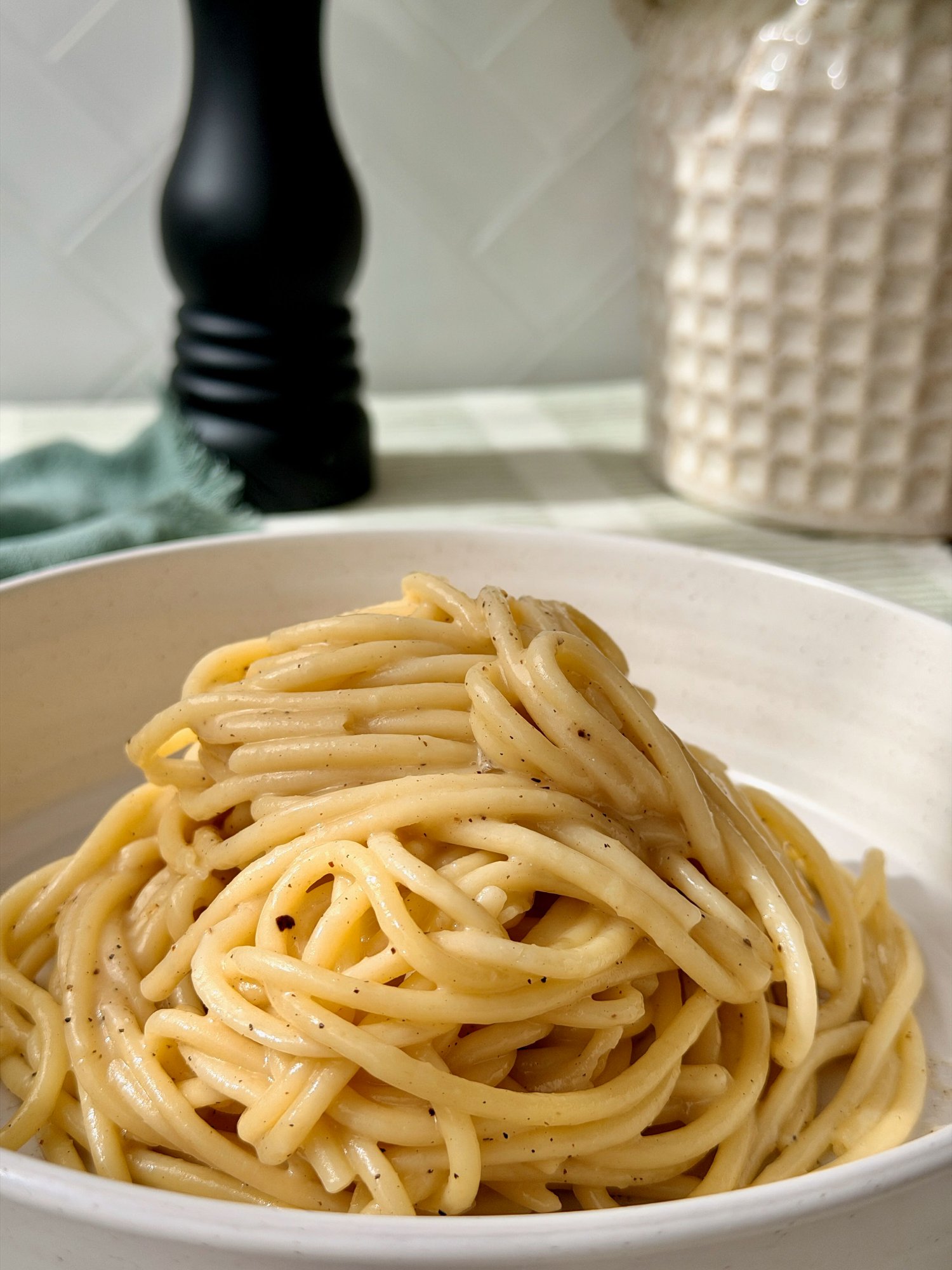
Four ingredients, and three of them are already in the pantry. Cacio e Pepe earns its place through technique rather than a long shopping list, and the first time I made it properly, standing over the pan with the heat off and the cheese turning glossy instead of grainy, I understood why Roman cooks are so particular about the method.
The pepper is toasted in a dry pan before anything else happens, and it changes completely: sharper, warmer, almost floral against the salt of the Pecorino. Everything after that is patience and pasta water, added a splash at a time until the sauce decides it is ready.
We make it on the nights when the fridge is bare and nobody wants to think about dinner. For something that costs so little and asks so little, it has never once felt like a compromise.
Prep: 5 min · Cook: 10 min · Serves: 4 · Cuisine: Italian · Category: Dinner
Ingredients
Cacio e Pepe
- 400 g spaghetti or tonnarelli
- 200 g Pecorino Romano, finely grated, plus extra to serve
- 2–3 tsp freshly cracked black pepper, plus extra to serve
- Fine salt, for the pasta water
Method
- Bring a large pot of well-salted water to the boil. Add the pasta and cook until just al dente according to the packet instructions.
- While the pasta cooks, toast the cracked black pepper in a large frying pan over medium heat for 1–2 minutes until fragrant. Remove from the heat.
- Reserve about 2 cups of the starchy pasta cooking water before draining the pasta.
- Place the grated Pecorino Romano into a bowl. Gradually whisk in a little warm, not boiling, pasta water until it forms a smooth, thick paste.
- Add the drained pasta to the frying pan with the toasted pepper. Pour in a small splash of the reserved pasta water and toss to coat.
- With the pan off the heat, add the Pecorino mixture and toss continuously, adding a little more pasta water as needed until a smooth, glossy sauce coats every strand.
- Divide between warm bowls and finish with extra Pecorino Romano and another crack of black pepper.
Serving Suggestion
Cacio e Pepe is rich enough to stand alone, so keep whatever sits beside it simple. Garlic Green Beans with Olive Oil & Lemon or Charred Asparagus with Lemon & Feta cut through the salt of the Pecorino without competing with it. A basket of Simple Rosemary Focaccia is welcome for anyone who wants to chase the last of the sauce around the bowl, and Simple Tomato Bruschetta with Garlic-Rubbed Toast makes an easy start to the meal while the water comes to the boil.
Storage Notes
Cacio e Pepe is best enjoyed fresh. Leftovers can be refrigerated for up to 2 days, though the sauce will naturally thicken as it cools. Reheat gently in a pan with a splash of water, tossing continuously to help the sauce loosen and come back together.
Notes
Grate the Pecorino yourself, as finely as you can manage. Pre-grated cheese carries anti-caking agents that stop it melting into a smooth sauce.
Crack the pepper fresh from whole peppercorns rather than reaching for pre-ground. Pre-ground has already lost most of its aromatic oils and will taste flat no matter how well you toast it.
Let the reserved pasta water cool for a moment before it meets the cheese. Water straight off the boil will seize the Pecorino into strings.
If the cheese clumps, the pan was too hot. Add a splash of pasta water and keep tossing off the heat until it comes back together.
Salt the pasta water generously but taste before adding any more salt at the end. Pecorino Romano is very salty on its own.
Tonnarelli is the traditional Roman pasta for this dish, though good-quality spaghetti works just as well and is far easier to find.
The Grace Table Tip
Warm the serving bowls before you plate, either with a splash of hot pasta water swirled and tipped out, or a few minutes in a low oven. The sauce tightens as it cools, and a warm bowl buys you the extra minute it takes to get everyone to the table while it is still loose and glossy.
Pecorino Romano is what makes this dish what it is, so it is worth seeking out at a deli or good supermarket cheese counter. Parmesan will still give you a good bowl of pasta, but it is milder and sweeter, and the result is a different dish rather than a substitute.