Bolo de Mel da Madeira
A dark, dense and deeply spiced Madeiran cake made with molasses, Madeira wine, citrus, walnuts, almonds and raisins. Traditionally prepared ahead of Christmas, its rich flavour develops as the cake rests and matures.
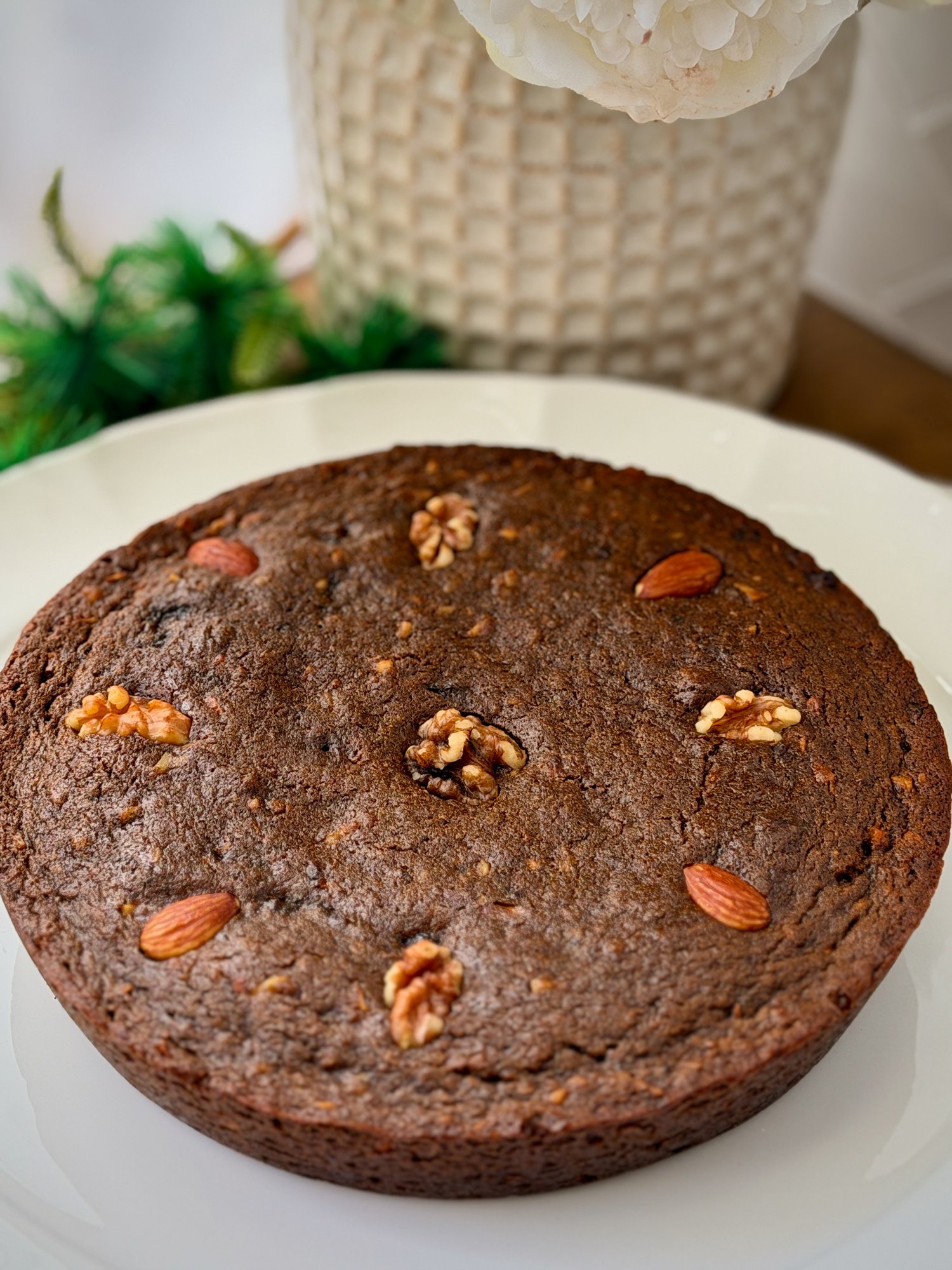
<p>In my family, Bolo de Mel came out for the moments that mattered. Every Christmas, of course, but also for birthdays, celebrations and any gathering that felt truly special. It was never an everyday cake, and that was part of its magic.</p><p>Back in Madeira, it was once considered a cake for wealthier households. Mel de cana, the island’s sugarcane honey, along with butter, spices, Madeira wine and nuts, were precious ingredients, so a Bolo de Mel on the table said that this occasion was worth marking. That sense of occasion travelled with my family, and it has never quite left the cake.</p><p>Mel de cana isn’t something we can buy here in Australia, so this recipe uses molasses, just as my family always has. It gives the same deep colour and rich, dark sweetness that makes this cake what it is.</p><p>It is dark, dense and moist, heavy with cinnamon, clove and anise, brightened with citrus and studded with walnuts and almonds. If you know someone who quietly passes on fruit cake, this is the one to offer them. It has all the spice, depth and richness, without the mountains of fruit, and a sweetness that stays beautifully balanced.</p><p>It also keeps wonderfully. Like a good fruit cake, it matures as it rests, only better. My family always wrapped ours in baking paper and tucked them into old biscuit tins, opening them over the weeks as the flavour deepened.</p><p>And it is never cut with a knife. The old superstition says a knife brings bad luck, so pieces are broken away by hand and shared around the table. I still wouldn’t dream of doing it any other way.</p><p>Every Madeiran family guards its own recipe, each with small differences passed quietly from one generation to the next. Ask any Portuguese cook and they will happily tell you yours isn’t quite like theirs.</p><p>This is ours. Made the way my family has always made it, wrapped in paper, kept in a tin, and broken by hand at the table when the occasion calls for something truly special.</p>
Prep: 30 min · Cook: 110 min · Yield: Makes 2 × 20 cm cakes · Cuisine: Portuguese · Category: Cakes
Ingredients
Yeast Starter
- 100 g plain flour
- 60 g lukewarm water
- 2 g instant dried yeast
Bolo de Mel
- 400 g plain flour
- 400 g Australian molasses
- 150 g unsalted butter
- 150 g pork lard
- 200 g dark brown sugar
- 80 ml Madeira wine
- ½ tsp bicarbonate of soda
- 70 ml fresh orange juice
- Finely grated zest of 2 oranges
- Finely grated zest of 1 lemon
- 4 tsp ground cinnamon
- 1 tsp ground anise
- ½ tsp ground cloves
- ½ tsp ground nutmeg
- ½ tsp fine salt
- 70 g raisins, chopped
- 100 g walnuts, finely chopped
- 80 g almonds, finely chopped
- Whole walnuts and almonds, for decorating
Method
- Combine the flour, lukewarm water and yeast in a small bowl until a firm dough forms.
- Knead briefly, cover and leave at room temperature for 1 to 2 hours, until the starter shows light expansion and visible aeration.
- Use the active starter directly in the main dough.
- Place the molasses, butter and lard in a saucepan over low heat. Warm gently until the butter and lard have melted, without allowing the mixture to boil. Remove from the heat and leave until warm rather than hot.
- Sift the plain flour and bicarbonate of soda together into a large mixing bowl. Add the brown sugar, cinnamon, anise, cloves, nutmeg and salt, and stir until evenly combined.
- Tear the active yeast starter into small pieces and work it through the dry ingredients until completely combined.
- Gradually add the warm molasses mixture, mixing thoroughly as you go.
- Add the Madeira wine, orange juice, orange zest and lemon zest. Mix until the dough is dark, smooth and cohesive.
- Fold through the raisins, chopped walnuts and almonds until evenly distributed. Do not beat or whip the mixture.
- Cover the bowl and leave the completed dough to rest at room temperature for approximately 48 hours.
- When ready to bake, preheat the oven to 140°C fan forced. Grease and line a 20 cm round cake tin.
- Weigh the rested dough and divide it evenly into two portions.
- Press one portion evenly into the prepared tin and smooth the surface. Decorate with whole walnuts and almonds.
- Bake on the middle rack for approximately 55 minutes, until the cake has begun to pull slightly away from the sides and a skewer inserted into the centre comes out clean.
- Allow the cake to settle in the tin before carefully turning it out to cool completely.
- Re-line the tin, shape and decorate the remaining dough, then bake the second cake at 140°C fan forced for approximately 55 minutes.
- Cool completely before wrapping and allowing the flavours to mature.
Serving Suggestion
Traditionally, Bolo de Mel da Madeira is broken apart by hand rather than sliced with a knife. Place the whole cake on the table and pull away pieces to share, allowing the dense crumb, warm spices, citrus and Madeira wine to be enjoyed as they have been for generations.
Storage Notes
Once completely cool, wrap each cake in baking paper and store in an airtight container or an old biscuit tin in a cool, dry place. The flavour continues to deepen over the following weeks, so Bolo de Mel is particularly well suited to being prepared ahead of Christmas.
Notes
Use a full flavoured molasses rather than blackstrap molasses. Blackstrap is considerably more bitter and can overwhelm the spice and citrus.
The yeast starter only needs to become visibly active and lightly aerated. It does not need to double in size before being incorporated into the main dough.
The finished mixture should be very thick, dark and cohesive rather than light or aerated. Avoid vigorous beating once the ingredients are combined.
Bolo de Mel develops character as it sits. Give the baked cake a few days to mature before serving, and the spices, molasses and Madeira will settle beautifully together.
The Grace Table Tip
Resist the instinct to reach for a knife when serving Bolo de Mel. Traditionally the cake is broken apart by hand, giving you wonderfully irregular pieces and preserving a small but important part of the Madeiran tradition.
For the best flavour, make Bolo de Mel ahead rather than on the day you intend to serve it. Once completely cool, wrap it well and allow the spices, molasses, citrus and Madeira wine time to settle together.