Bifanas à Moda do Porto
Bifanas à Moda do Porto are thin slices of pork simmered in a rich sauce of garlic, white wine, beer, paprika and tomato, then tucked into warm papo secos so the bread catches every drop. A classic Portuguese pork sandwich, generous and deeply savoury, made for feeding a table of people well.
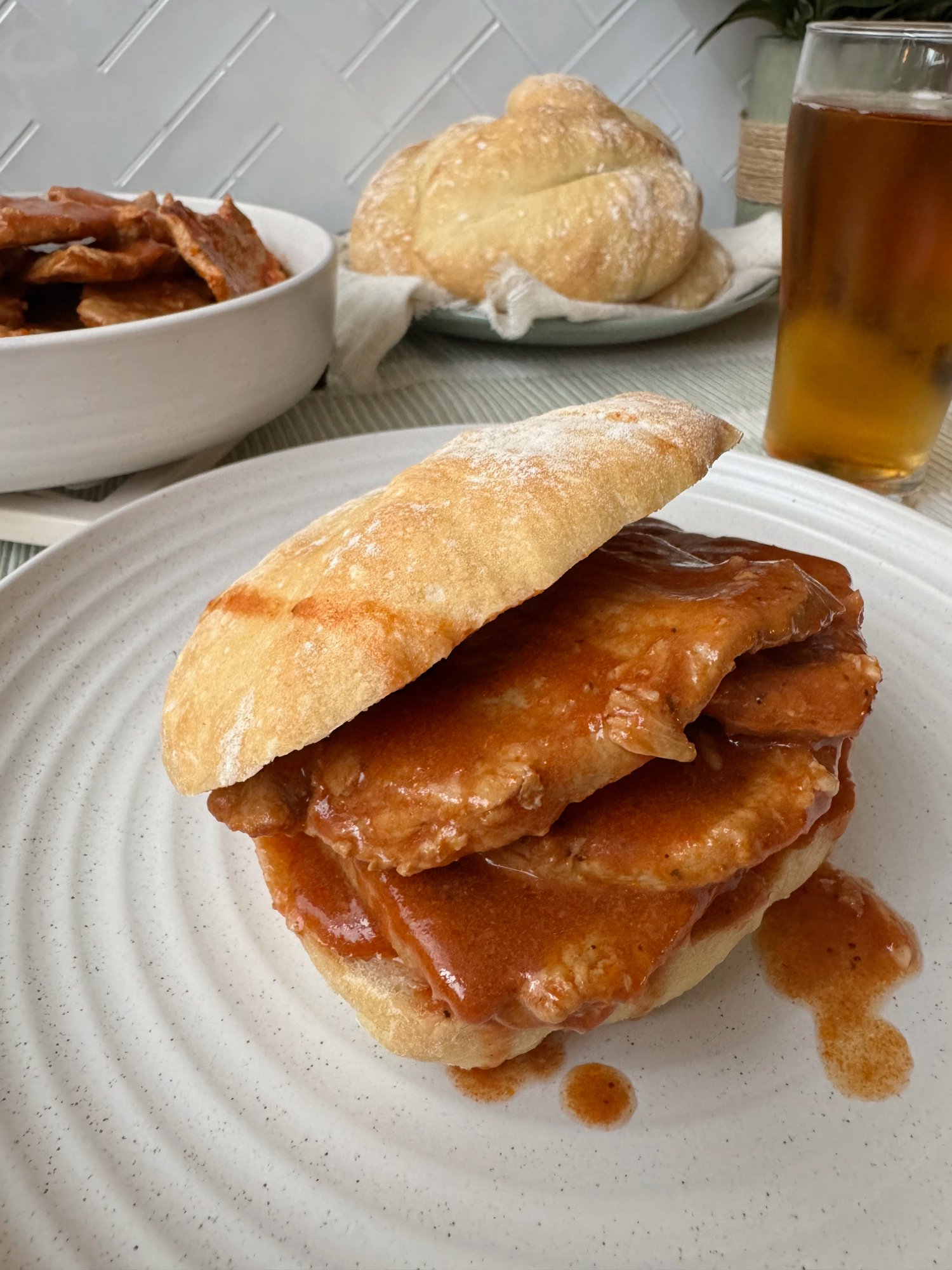
In Portugal, bifanas are the kind of food you eat standing at a counter, paper napkin in hand, sauce down your shirt before you've had a chance to think about it. Every region has its version, and every family has its opinion on what belongs in the pot. The Porto style is richer and redder than most, built on white wine and beer, garlic and paprika, with a slow simmer that turns the pork tender and the sauce glossy and deeply savoury. Food like this was never written down in the kitchens it came from. It was made by feel, adjusted by taste, and handed across the table without ceremony.
Prep: 25 min · Cook: 60 min · Serves: 8 · Cuisine: Portuguese · Category: Dinner
Ingredients
For the pork
- 1.2–1.5 kg pork loin, pork leg steaks, or pork scotch/neck
- 2 tbsp olive oil or lard, for browning
For the marinade
- 8–10 garlic cloves, crushed
- 2 bay leaves
- 1½ cups white wine
- ½ cup beer
- 2 tbsp white wine vinegar
- 1½ tbsp sweet paprika
- 1½ tsp salt
- ½ tsp black pepper
- Small pinch chilli flakes or peri peri, optional
For the sauce
- 2–3 tbsp tomato paste
- ½ cup passata, or blended crushed tomatoes
- 1 cup chicken stock or pork stock
- Reserved marinade
- 1 tbsp butter or extra lard, optional, to finish
To serve
- 8 papo secos or Portuguese-style bread rolls
- Mustard, optional
- Extra sauce from the pan
Method
- Slice the pork as thinly as possible, around 2–3 mm thick. If the pork is difficult to slice, place it in the freezer for 20–30 minutes first to firm it slightly. If any slices are too thick, place them between baking paper and gently flatten them with a rolling pin or meat mallet.
- In a large dish or bowl, combine the garlic, bay leaves, white wine, beer, white wine vinegar, sweet paprika, salt, black pepper and chilli if using. Add the pork and turn the slices through the marinade until well coated. Cover and refrigerate for at least 2 hours, or overnight if time allows.
- When ready to cook, lift the pork slices out of the marinade and let the excess drip back into the dish. Place the pork on a plate. Do not discard the marinade. It will become part of the sauce.
- Heat the olive oil or lard in a large, wide pan or shallow casserole over medium-high heat. Brown the pork in batches for 30–60 seconds per side. Do not crowd the pan and do not cook the pork fully at this stage. You are building colour and flavour only. Transfer the browned pork to a plate and repeat with the remaining slices.
- Reduce the heat to medium. Add the tomato paste to the same pan and stir it into the fat and browned bits. Cook for 1–2 minutes, until the tomato paste darkens slightly and smells rich. Add the passata and cook for another 2–3 minutes, stirring often.
- Pour in the reserved marinade and the stock. Stir well, scraping the base of the pan so all the flavour lifts into the sauce. Bring to a gentle simmer.
- Return the browned pork to the pan and turn the slices through the sauce. Reduce the heat to low, partly cover the pan, and simmer gently for 40–60 minutes, or until the pork is tender and the sauce is red-orange, glossy and savoury. Stir occasionally and turn the pork through the sauce as it cooks. If the sauce reduces too much before the pork is tender, add a splash of water or stock. If the sauce is too thin once the pork is tender, simmer uncovered for 5–10 minutes.
- Taste the sauce and adjust as needed. If it tastes flat, add a little more salt. If it tastes too sharp or winey, simmer uncovered a little longer. If it tastes too acidic, add a tiny pinch of sugar. If it needs richness, stir through the butter or a little extra lard. Remove the bay leaves.
- Warm the papo secos if needed. Split each roll and spoon a little sauce onto the inside of the bread. Add several slices of pork, then spoon over a little more sauce so it soaks into the bread. Add mustard if using. Serve hot.
Serving Suggestion
Bifanas are made to be served in Portuguese Bread Rolls (Papo Secos), split and loaded with plenty of sauce. On the side, Traditional Portuguese Tomato Rice (Arroz de Tomate) or Portuguese Garlic Rice (Arroz de Alho) work beautifully, or keep it simple with chips or roast potatoes and a green salad. Mustard on the side is optional but worth having on the table.
Storage Notes
Store leftover pork and sauce together in an airtight container in the fridge for up to 3 days. Reheat gently in a saucepan over low heat, adding a splash of water or stock if the sauce has thickened. Do not store assembled bifanas as the bread will soften. The cooked pork freezes well in its sauce: cool completely, portion into airtight containers, and freeze for up to 3 months. Thaw overnight in the fridge and reheat gently until piping hot.
Notes
Pork cut: pork loin, leg steaks, or scotch/neck all work well. Scotch or neck will give a slightly richer result as they have more fat running through them. Loin is leaner and slices very cleanly.
Do not rush the simmer. The long, gentle cook is what turns the pork tender and builds the sauce into something glossy and deeply savoury. High heat will toughen the meat.
The tomato should support the sauce, not dominate it. The finished sauce should taste of garlic, wine, paprika and pork, with tomato in the background rather than at the front.
A little beer is what gives the Porto-style sauce its particular depth. A lager or pale ale works well. Do not use a dark or bitter beer as it will change the flavour significantly.
If you have pimenta moída or massa de pimentão, a spoonful stirred into the sauce at Step 5 adds an authentic Portuguese flavour. The recipe is written without it so it stays practical with everyday pantry ingredients.
The Grace Table Tip
Bifanas are best served the moment the pork comes off the heat, while the sauce is at its glossiest. Warm your papo secos in the oven at 160°C for 5 minutes before assembling so the bread is soft inside and just slightly crisp at the edges, ready to absorb the sauce without going soggy immediately.